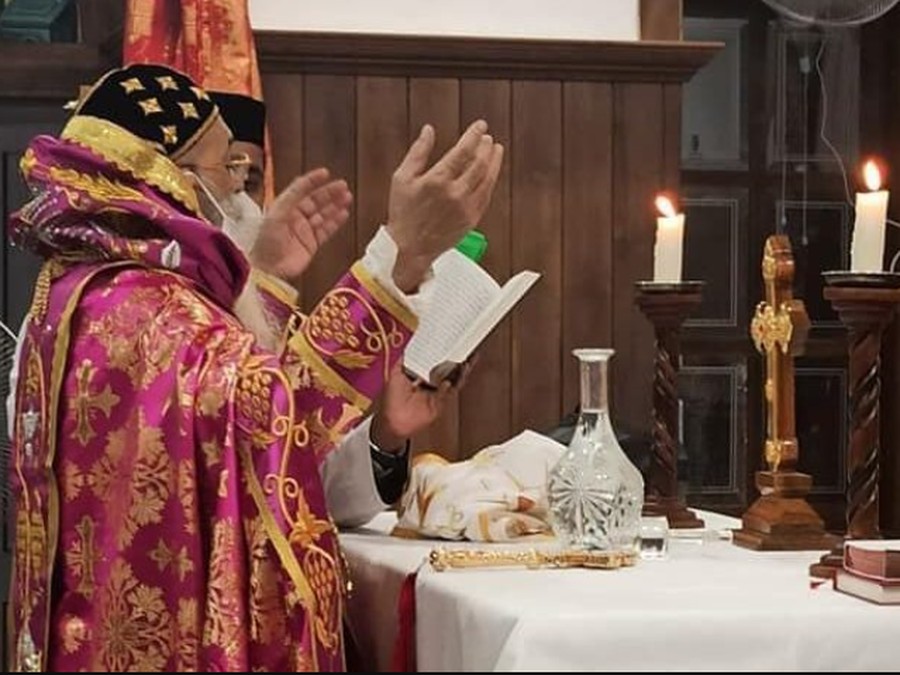
The present study is concerned with a small but instructive group of persons who entered the Malankara Orthodox Syrian Church from non-Christian religions. Five biographies are considered in turn: those of Fr. Shapurji Dadabhai Bhabha, Paul Ciniraj Mohammed, V. Rev. Sudha Paul Ramban, Sr. Vandana Mary and Fr. Peter Paul.
The five subjects derive from Parsi Zoroastrian, Muslim and Hindu backgrounds, and their lives extend from the middle of the nineteenth century to the present decade. The routes by which they reached the Church were no less diverse: a physician’s independent scholarly inquiry, conducted from London and pursued through a prior Presbyterian affiliation; a university student’s encounter with Christian contemporaries; a young man’s search for spiritual counsel in the face of a prediction concerning his sister; a Marathi Hindu upbringing that culminated in monastic profession; and an orphan’s upbringing within a home established by the Church’s own mission. In every instance, conversion issued in a distinct vocation and in sustained service, whether as priest, missionary or monastic.
Fr. Shapurji Dadabhai Bhabha: a Parsi physician and the Church’s first priest in the United Kingdom
Rev. Fr. Dr. Shapurji Dadabhai Bhabha (MOSC) (d. 3 January 1941) was the first person to be ordained and to serve as a Malankara priest in the United Kingdom. He was born in the middle of the nineteenth century into a prominent Parsi Zoroastrian family at Surat. A medical practitioner by profession, his life constitutes an instructive testimony to strength of faith and perseverance in the face of adverse circumstances.
At the age of fourteen he travelled to Ireland for higher studies, with the assistance of the Indian nationalist leader Dadabhai Naoroji, known as the ‘Grand Old Man of India’, who was also his uncle. Having completed a postgraduate medical degree at the University of Glasgow, Scotland, he established a practice in London, where he soon acquired a reputation as an excellent physician.
It was during his studies in the United Kingdom that Bhabha was drawn to Christianity. He embraced the Presbyterian faith and became an active worker on its behalf; he was elevated to the office of deacon and entrusted with mission responsibility among the Jews of the United Kingdom, a number of whom converted to Christianity as a result of his labours. So considerable was this success that the Presbyterian Church constituted a separate mission congregation to work exclusively among the Jews, and established a centre at Jerusalem in furtherance of the programme.
Even during his active service with the Presbyterian Church, Bhabha did not cease his researches into Christianity, and these brought him to an awareness of the Malankara Church in India. Although he had no connection with any member of that Church, he had mastered its doctrines and possessed an in-depth knowledge of its history, and he published several articles in British periodicals, together with many pamphlets, on the subject of the Malankara Church.
The strength of conviction evident in these writings soon attracted the attention of the Malankara Church, and Bhabha entered into contact with its then primate, Joseph Mar Dionysius V (MOSC). Drawn to the Malankara Church, he expressed the wish to become a member of it and to enter its priesthood. Mar Dionysius V readily assented and directed him to Jerusalem for ordination; having been ordained there, Bhabha left for the United Kingdom in January 1903. He was further appointed by Mar Dionysius V as Ambassador of the Malankara Church in the United Kingdom.
One service rendered by Bhabha deserves particular mention. The church historian Dr M. Kurian, whose assessment is paraphrased here, observes that Bhabha’s name is recorded in history ‘in golden letters’ for the part he played in the enthronement of St. Dionysius of Vattaserril (MOSC) as Malankara Metropolitan in 1909.
The circumstances were as follows. The Malankara Association, meeting in 1908, had elected the Very Rev. Fr. Geevarghese Ramban as successor to the Malankara Metropolitan, Mar Dionysius V. Although Patriarch Abdullah II consecrated Geevarghese Ramban under the episcopal name Dionysius, he declined to issue the Sthathikon, the certificate of the consecration of bishops. The reason lay in the Royal Court judgement of 1889 in the Seminary case, which had reaffirmed that the Patriarch of Antioch possessed no temporal authority over the Malankara Church. To surmount this obstacle, the Patriarch repeatedly demanded a registered deed by which the Malankara Church would accept his temporal authority; this demand was declined by Mar Dionysius V and by the Managing Committee of the Malankara Association. At his consecration, St. Dionysius of Vattaserril was himself asked for such a document, and this too was duly refused. The Patriarch accordingly withheld the Sthathikon.
In 1909 Mar Dionysius V reposed in God. At that time Patriarch Abdullah II was in London, en route to Kerala, where he remained for three months as the guest of Bhabha. The faithful appreciated the gravity of the absence of the Sthathikon, and the lay trustees repeatedly petitioned the Patriarch for the document, which he continued to decline. It was in this critical situation that Bhabha intervened, and it was through his efforts that Patriarch Abdullah II issued the Sthathikon from London. The enthronement of Mar Dionysius VI as Malankara Metropolitan consequently proceeded smoothly. Had it not taken place, Kurian judges, the fate of the independence of the Malankara Church would have been unpredictable, and the Church, in his estimation, remains permanently indebted to Bhabha for his valuable role during this crucial period.
Bhabha celebrated the Holy Qurbana using the English translation of the Anaphora of St. James. He was closely associated with HG Thoma Mar Dionysius (MOSC) of blessed memory: during the latter’s residence in the United Kingdom, as Fr. C. M. Thomas Ramban, for research at the University of Oxford, the two worked together to make the message of the Church known in good esteem.
In 1937, Bhabha met Catholicos HH Moran Mar Baselius Geevarghese II (MOSC) on several occasions during the Catholicos’s stay in London, where the latter was present in the United Kingdom for the Edinburgh Conference. Bhabha received the Catholicos at his residence and received Holy Communion from him at the Eucharistic service which the Catholicos celebrated at the Armenian Church in London. The Very Rev. Fr. C. M. Thomas Ramban (later Metropolitan Thoma Mar Dionysius), who had accompanied the Catholicos to England and remained there until 1939 for higher studies at Oxford, administered the Holy Sacrament of the Anointing of the Sick.
Bhabha never married, and he spent the last phase of his life with a relative in London. He died in 1941. Owing to the absence of Malankara priests under the political conditions then prevailing, his burial could not be conducted by the clergy of the Church.
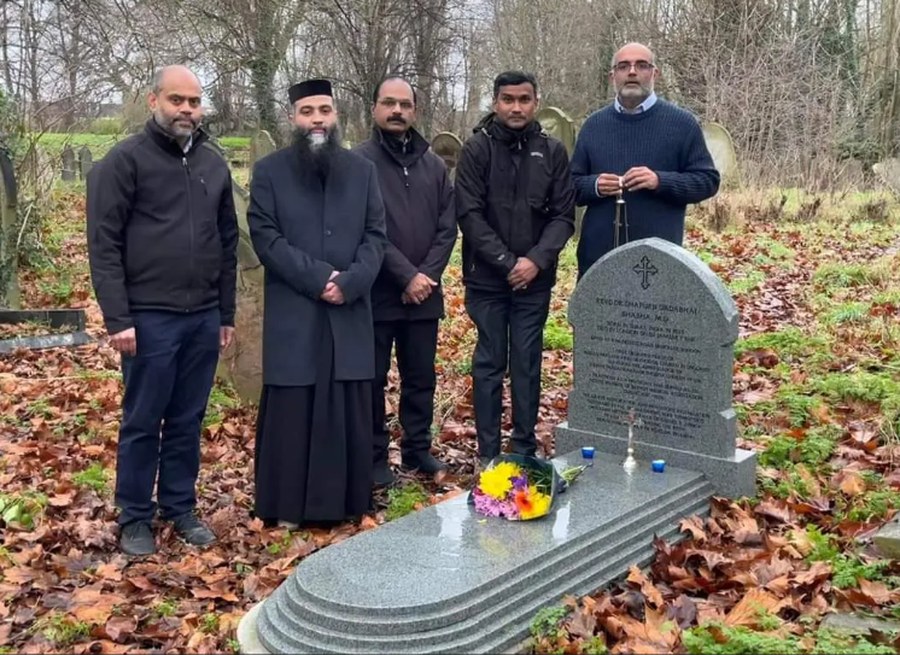
Bhabha authorised Mount Tabor Dayara, Pathanapuram, founded by HG Thoma Mar Dionysius, to take charge of his mortal remains, and a memorial service and prayers for him have been conducted there every year to the present day. In the course of time, however, the location of his tomb was lost. Serious enquiry began only after the establishment of the UK-Europe-Africa Diocese of the Malankara Orthodox Church, and in 2021 the grave was found at Brockley Cemetery, which lies close to the principal parish in the United Kingdom, St. Gregorios Indian Orthodox Cathedral, London. The Monastery of the Holy Transfiguration, Pathanapuram, transferred possession of the tomb to the diocese, and on the initiative of the Diocesan Metropolitan the tomb was restored and rededicated in 2021 to mark the eightieth anniversary of his death. From 2021 the diocese has also commemorated him by a special Kalpana.
Paul Ciniraj Mohammed: a convert from Islam and a missionary to Malabar
Paul Ciniraj (MOSC) was born on 5 May 1954 in Kalloor, a rural village in Thiruvananthapuram, and was raised in the Muslim Kochera family. His father, Janab Kassim Pillai, was a retired higher secondary school headmaster and an Islamic scholar who had founded the local mosque; his mother, Fatima Beevi, was a homemaker. The family belonged to the Labbay Muslim community.
Ciniraj studied at Kalloor Government Upper Primary School until the seventh grade and thereafter at Pothencode Lekshmi Vilasom High School, where he completed the S.S.L.C. He graduated from Mar Ivanios College and subsequently undertook postgraduate studies at the University of Trivandrum.
During his university studies, Ciniraj converted from Islam to Christianity following an encounter with Christian students and their message concerning Jesus Christ. He was baptised by His Holiness Baselios Marthoma Mathews II (MOSC) and later became a member of Manganam Ebenezer Orthodox Church, after which he became active in Christian ministry and evangelistic work.
His conversion occasioned serious difficulties with sections of the community to which he had formerly belonged. According to accounts of his life, Ciniraj survived an acid attack and a knife attack, the latter of which severely injured his lower jaw and cost him several teeth. He also reported attacks upon his family, including an incident in which his three children fell critically ill after being given poison. He and his assistant pastor were later severely beaten by a mob that also burned their prayer hall, and he survived further threats and alleged attempts on his life.
In the course of time, Ciniraj was able to restore his relations with his parents and extended family. His parents, who had been devout Muslims, accepted his Christian faith before their deaths.
Ciniraj founded and led Salem Voice Ministries, in whose work his family assisted. Authorised by the Malankara Orthodox Syrian Church, the ministry directed its efforts in particular towards Muslim communities, through evangelism, missionary training, charitable work, education, orphanages and other social activities. It also maintained dozens of underground Muslim-convert mission churches and Christian fellowships in rural parts of Malabar, notably in the Malappuram and Kozhikode districts. The Holy Episcopal Synod conferred upon him the official title of Malankara Sabha Missionary.
Ciniraj was also an author. His published works in Malayalam include Maranavum Roopantharavum (The Death and Transfiguration), Itha Ninte Amma (Behold Thy Mother), Swargeeya Ayiru (The Heavenly Ore), Bible Tablet and Quiz, and Vishudha Qur’an Quiz, and he contributed numerous articles to periodicals. Paul Ciniraj died in May 2026, at the age of seventy-two.
V. Rev. Sudha Paul Ramban: ‘St. Paul of Attappadi’
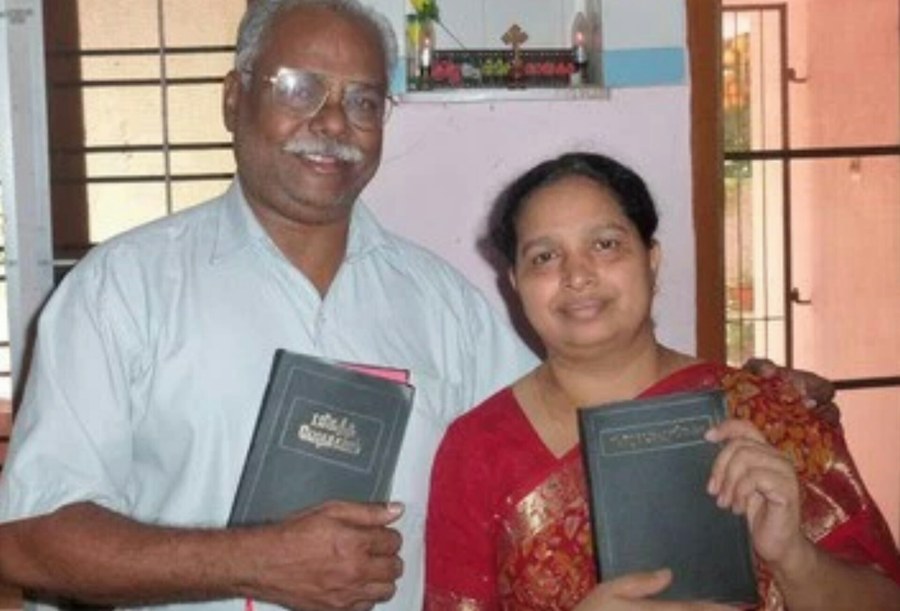
V. Rev. Sudha Paul Ramban (MOSC), commonly known as St. Paul of Attappadi, is a notable priest and missionary of the Malankara Orthodox Syrian Church, distinguished by a life of asceticism and by his service among marginalised and disadvantaged communities. He was born Sudha Kumar at Nedumbarathu Naalukettu Veedu in Thripunithura, into a Brahmin Hindu family. He lost his mother at the age of two and was raised by his father and elder sister.
In 1970, while working at Palakkad, Sudha Kumar confided to a young man his fear that he would lose his sister at the age of twenty-five, as a Hindu priest had foretold. The young man introduced him to the Orthodox priest Rev. Fr. P. V. Joseph (MOSC), to whom he put the question whether God could resolve his difficulties. Fr. Joseph guided him spiritually and introduced him to the Christian faith, thereby bringing him closer to Christ.
This process culminated in his baptism in 1979 by HG Mar Timothios (MOSC), who later became HH Baselios Marthoma Didymos I (MOSC). Under the spiritual guidance of Timothios Thirumeni, Sudha Kumar matured in the Christian faith and eventually chose a life of asceticism and service.
He became one of the pioneers of St. Thomas Ashram at Attappadi, where he devoted his life to serving some of the most vulnerable members of society, and he became widely known for his work among tribal communities, the poor and destitute, persons affected by leprosy and AIDS, and their families. Sudha Paul Ramban has spent decades working among these communities at Attappadi and has also engaged in missionary work in North India, having visited various dioceses of the Malankara Orthodox Church in pursuit of his vision of an expanded mission of the Church in North India.
Through this life of asceticism, missionary endeavour and service to marginalised communities, V. Rev. Sudha Paul Ramban has become an important witness of the Malankara Orthodox Church and has earned the affectionate designation ‘St. Paul of Attappadi’.
Sr. Vandana Mary: from a Marathi Hindu household to monastic vocation and theological distinction
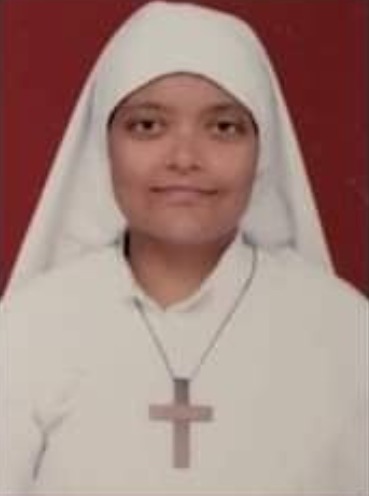
Sister Vandana Sinha (MOSC), whose baptismal name is Mary, is a member of the Gregorian Community at Roha in the Bombay Diocese and the first nun from that diocese. She was raised in a Marathi Hindu family and later embraced the Orthodox Christian faith, becoming a member of the Malankara Orthodox Syrian Church. Her passage from a Marathi Hindu background to the Orthodox faith led in due course to religious life, and she became a nun in the Gregorian Community at Roha, Mumbai.
Sister Vandana is an alumna of St. Thomas Orthodox Theological Seminary (STOTS), Nagpur, where she read for the Bachelor of Divinity (B.D.) between 2020 and 2024. She secured the First Rank with Distinction (Grade A+) and the overall highest position in the B.D. programme of the Senate of Serampore University, an academic achievement without precedent in the Malankara Orthodox Syrian Church, which made her the highest-scoring B.D. student in the history of its two theological seminaries.
At the Serampore University convocation held at Nagaland on 22 November 2024, her attainment was formally recognised. She received the Rev. C.C. Pande Memorial Prize for the overall first rank and highest grade in the B.D. programme; the C.E. Abraham Prize in Church History; the E.C. Dewik Prize in Religion; the Rt. Rev. S.R. Furtado Prize for the highest grade in Christian Ministry; and the Late Dr. C. Devasahayam Prize in Christian Ministry.
Her life thus represents a remarkable journey from a Marathi Hindu upbringing to the Orthodox Christian faith and, ultimately, to a vocation of monastic service. As a member of the Gregorian Community at Roha, she continues in that vocation and remains an inspiring figure within the Bombay Diocese and the wider Malankara Orthodox Syrian Church.
Fr. Peter Paul: an orphan of the Church’s mission and the first priest from Madhya Pradesh
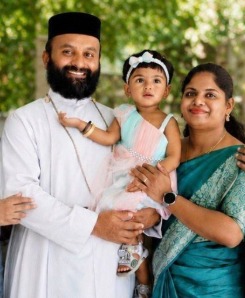
Fr. Peter Paul (MOSC) was born into a general-category Hindu family in Madhya Pradesh. His mother died during delivery, and his father died of tuberculosis when he was three years old. Orphaned, he was taken in and raised at St. Paul’s Balagram in Itarsi, Madhya Pradesh, a home established by HG Geevarghese Mar Osthathios (MOSC) originally for the sons of leprosy patients.
At Balagram he grew up in a highly disciplined environment directed to physical, mental, social and spiritual development. The children followed a strict daily routine, beginning at five o’clock in the morning and continuing until ten at night, and they received education and spiritual formation, together with the support of the staff and of brothers from the theological seminary at Nagpur, who came to provide tutoring and additional assistance.
Peter Paul was the first student of Balagram to complete a B.Com. degree successfully. He subsequently proceeded to the P.G. College conducted by the Kottayam Diocese, where he pursued postgraduate studies in Commerce. His progress from orphanhood within the Church’s mission to higher education eventually led him to the priesthood, and he became the first native of Madhya Pradesh to enter the clergy of the Malankara Orthodox Syrian Church.
Common features
Considered together, these five lives illustrate the diversity of the paths by which persons of non-Christian origin have entered the Malankara Orthodox Syrian Church: through scholarly inquiry that preceded any personal contact with the Church; through a university encounter with Christian contemporaries; through pastoral counsel sought at a moment of anxiety; through a Hindu upbringing that issued in monastic profession; and through the mission institutions of the Church itself. In each case conversion did not terminate in nominal membership but issued in a distinct vocation, whether in the priesthood, in missionary leadership or in the monastic life.
Their service, moreover, was directed towards distinct constituencies: the representation of the Church in the United Kingdom and, at a critical juncture, the preservation of its independence, in the case of Bhabha; the Muslim communities of Malabar in that of Ciniraj; the tribal and marginalised communities of Attappadi, together with the Church’s mission in North India, in that of Sudha Paul Ramban; the monastic and theological life of the Church in that of Sr. Vandana; and the pastoral ministry of a priest formed within the Church’s own mission home in that of Fr. Peter Paul. The biographies also record a series of firsts within the Church: the first Malankara priest ordained to serve in the United Kingdom, the first nun of the Bombay Diocese, the highest-scoring Bachelor of Divinity student in the history of the Church’s two theological seminaries, and the first native of Madhya Pradesh to enter its clergy.