In Communion

Saints of Malankara

Nineteen centuries after the Apostle Thomas first set foot on this coast, his flame still passes from hand to hand. It has burned, in every generation, in men who fasted in forest hermitages and men who stood in courtrooms; in bishops who crossed the sea to Jerusalem and in priests who never left their own parish gate; in the learned and the unlettered alike. The Church calls this company her cloud of witnesses — not because their lives were without struggle, but because their struggle was carried, start to finish, toward God.

Gathered here are twelve of them. Four have been formally glorified by the Episcopal Synod — their sainthood a settled matter of the Church's calendar and canon. The remaining eight are held in a gentler, older kind of honour: the veneration of the parishes and families who still keep vigil at their tombs, whose causes for canonisation are not closed but simply not yet finished — the Church, unlike time, is never in a hurry.

Their bodies rest in the soil of Malankara. Their intercession, the faithful hold, rests nowhere in particular — it is simply always near.

Titles below follow the honour each has so far received from the Church: Saint (canonised), Venerable, and Blessed. A gold ribbon marks any saint whose feast falls on today's date.

A lamp has been lit in veneration of the saints.

The Canonised

Formally glorified by the Episcopal Synod, and entered into the calendar of the Church.

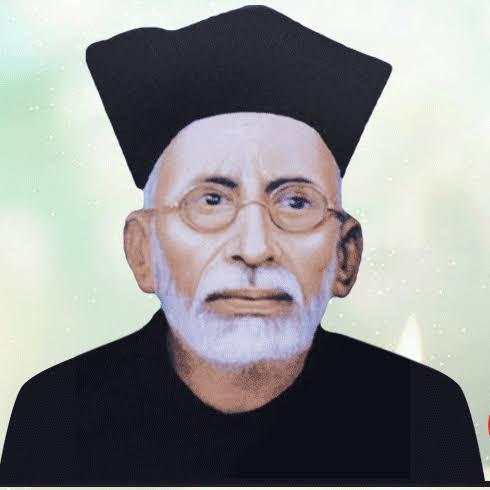
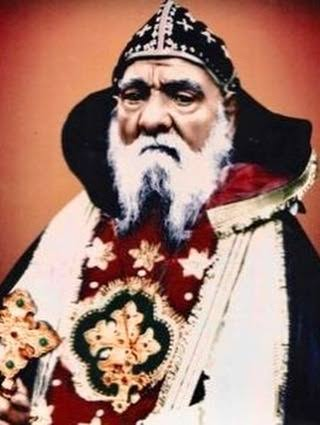
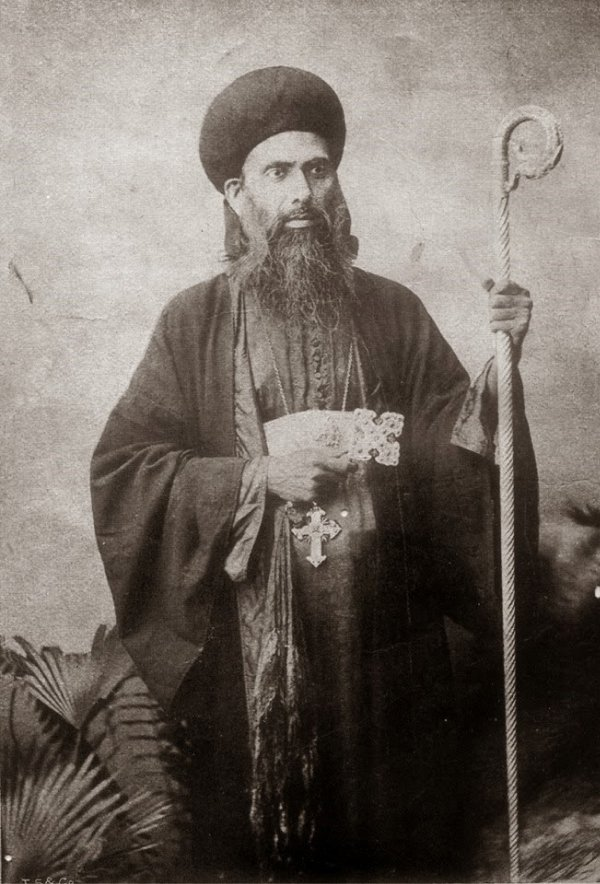
St. Gregorios of Parumala Commemorated Today
15 June 1848 – 2 November 1902
Saint

Gregorios of Parumala

Popularly Parumala Thirumeni
ഗീവർഗീസ് മാർ ഗ്രീഗോറിയോസ്
Metropolitan of Niranam Entombed at St. Peter & St. Paul's Church, Parumala First declared saint of Malankara

Born on 15 June 1848 to Kochu Mathai and Mariam of the Pallathetta family at Mulanthuruthy, the child known in infancy as Kochaippora was baptised Geevarghese. His mother died when he was two years old, and he was thereafter raised by his eldest sister, Mariam. At the age of ten, already distinguished by his piety and his command of the ancient Syriac chants, he was ordained a reader-deacon; the Malpan who had instructed him succumbed to smallpox, and the boy himself survived the same illness, a recovery his family regarded as an act of providence.

He withdrew for a period to the Vettickal Dayara, adopting an eremitic discipline of fasting and prayer, and was raised to the rank of Ramban there in 1872 by the Malankara Metropolitan, Pulikkottil Joseph Mar Dionysius. Three years later he served as secretary and translator to the visiting Patriarch of Antioch, Peter III, and assisted at the historic Synod of Mulanthuruthy in 1876, the same year in which, at twenty-eight, he was himself consecrated bishop — the youngest of six raised together to the episcopate — and given the see of Niranam under the name Geevarghese Mar Gregorios. His fellow bishops, in deference to his youth, called him Kochu Thirumeni, the Young Bishop.

He established his see at Parumala, in a modest riverside residence known as the Azhippura, and there devoted himself to a threefold labour that would define his episcopate: the administration of his diocese, the formation of the young deacons who gathered under him for instruction, and an unremitting missionary endeavour extended equally to the poor and the marginalised. At his instigation, schools were established across Malankara — at Kunnamkulam, Mulanthuruthy, Niranam, Thumpamon, and Thiruvalla — open, by his express wish, without regard to religion or gender. In 1895 he undertook a pilgrimage to Jerusalem and, upon his return, published Malayalam's first printed travelogue, an account later rendered into English a century afterward.

Among the deacons formed under him at Parumala were three who would themselves shape the Church for decades to come: Vattasseril Geevarghese, later Dionysius VI; Kuttikattu Paulose, later Mar Athanasios of Aluva; and Kallasseril Geevarghese, later raised as Catholicos Baselios Geevarghese II. A chronic illness overtook him in his final years, and on 2 November 1902 he died at Parumala, mourned by an assembly unprecedented in the parish's history. Within decades his tomb had become the foremost site of pilgrimage in the Malankara Church, and the testimonies of the faithful to his intercession continued without interruption. On the forty-fifth anniversary of his death, 2 November 1947, Catholicos Baselios Geevarghese II — once his own deacon — declared him a saint of the Malankara Orthodox Syrian Church. Forty years later, on 20 October 1987, His Holiness Ignatius Zakka I, Patriarch of Antioch, formally confirmed his sainthood for the wider Syriac Orthodox communion.

Parish: St. Thomas Cathedral, Mulanthuruthy

“…that the land would yield a hundred, sixty, and thirtyfold harvest.”

Remembered blessing over the fields near Mazhuvannoor
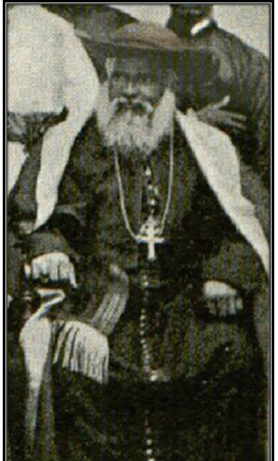
St. Alvares Julius Commemorated Today
29 April 1836 – 23 September 1923
Saint

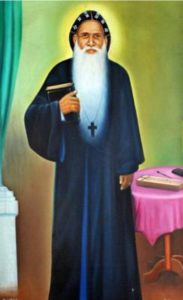
Alvares Julius

Metropolitan Alvares Mar Yulios of Goa, Ceylon & India outside Kerala
അൽവാറീസ് മാർ യൂലിയോസ്
Founder, Brahmavar Mission Entombed at St. Mary's Church, Ribandar Declared regional saint by Cath. Paulose II

Antonio Francisco Xavier Alvares was born on 29 April 1836 into an aristocratic Roman Catholic family in Portuguese Goa. Ordained to the Roman priesthood in 1869, he ministered there for eighteen years, distinguished equally by his philanthropy toward Goa's poor and by a patriotism ill-disposed to submit quietly to foreign rule. That same conviction rendered his position in Goa untenable, and in 1887 he departed for Brahmavar, in present-day Karnataka, in order to shepherd his growing following free of interference from the colonial authorities.

In Brahmavar he was received into the Syriac Orthodox Church by Mar Gregorios of Parumala, who raised him to the rank of Ramban. Alvares organised his disciples into an Orthodox mission that nonetheless retained the Roman liturgical rite, making his Brahmavar community one of the earliest Western Orthodox communities to return to communion with the East. On 29 July 1889 he was consecrated Metropolitan Alvares Mar Yulios of Goa, Ceylon, and India outside Kerala, by Mar Gregorios and the Malankara Metropolitan, Pulikkottil Mar Joseph Dionysius II; the mission he led subsequently spread through Karnataka, Andhra Pradesh, and Maharashtra, eventually serving some five thousand families across dozens of parishes.

In 1892 he participated in the consecration of the French Old Catholic priest Joseph René Vilatte as Metropolitan Timotheos, who was sent onward to reconcile Old Catholic communities in America to Orthodoxy. Returning to Goa in 1913, Alvares faced sustained persecution at the hands of the Portuguese authorities on account of his Orthodoxy: he was falsely accused, arrested, stripped of his episcopal vestments in public, and held in confinement before being beaten and brought before the courts. He bore this treatment without recanting and continued his ministry among Goa's poor and its lepers until his death in Panaji on 23 September 1923, denied by the same authorities even an Orthodox funeral.

He was buried quietly in the municipal cemetery of St. Inez. His tomb remained unmarked and largely forgotten until its rediscovery in January 1967 by Metropolitan Mathews Mar Athanasios; his relics were translated to St. Mary's Church, Ribandar, in 1979, and moved to their present tomb in 2001. On 6 December 2015, Catholicos Baselios Paulose II declared Alvares Mar Julius a regional saint of the Malankara Orthodox Syrian Church, together with his closest collaborator in Brahmavar, Fr. Roque Zephrin Noronha.

Parish: Holy Cross Church, Verna

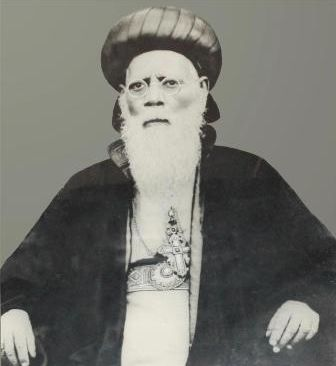
St. Dionysius the Illuminator Commemorated Today
31 October 1858 – 23 February 1934
Saint

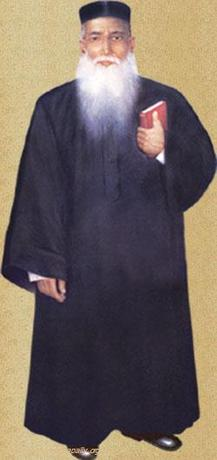
Dionysius the Illuminator

Popularly Vattasseril Thirumeni · “Malankara Sabha Bhasuran”
വട്ടശ്ശേരിൽ മാർ ദിവന്നാസ്യോസ്
15th Malankara Metropolitan Entombed at the Old Seminary, Kottayam Restorer of the Catholicate

Geevarghese Vattasseril was born on 31 October 1858, the fifth child of Joseph Vattasseril of Mallappally and Aleyamma Kolathu Kalathil of Kurichy. While still a student at CMS High School, Kottayam, he was ordained a sub-deacon by the visiting Patriarch of Antioch, Peter III. He subsequently studied for four years at the Old Seminary and, serving as secretary to Mar Gregorios of Parumala, acquired under that saint's tutelage so thorough a scholarship in Syriac and theology that by 1880 the Church had named him Malankara Malpan, a Doctor of the Church. He was a prolific author, producing a Syriac primer, an edition of the Church's order of worship, a Malayalam translation of the Holy Service book, and Mathopadeshasarangal, still regarded as among the most authoritative expositions of Orthodox doctrine in the language. He served, in addition, for eight years as Principal of the M.D. Seminary School, Kottayam.

Ordained Ramban in 1903 and consecrated Metropolitan at the Sehion House in Jerusalem, the traditional site of the Last Supper, on 31 May 1908, he assumed the name Geevarghese Dionysius and, the following year, succeeded to the full office of Malankara Metropolitan. It was in this office that his defining conflict began. The Patriarch of Antioch, Abdulla, pressed every bishop of that generation to sign deeds acknowledging his authority not only in spiritual matters but in the Church's temporal administration — its finances, schools, and parishes — a claim the Travancore courts had already rejected in 1889. Every other bishop of the period yielded; Dionysius alone refused, and for that refusal was excommunicated. The Church's Managing Committee nonetheless upheld him, and in 1911 the senior patriarch, Mar Abdul Messiah, recognised by Malankara as canonical, declared the excommunication void.

Church tradition holds that, on more than one occasion during the years of open conflict that followed, agents of the patriarchal faction made attempts upon his life, from which he emerged each time unharmed — a providence his people came to regard as a further sign of divine favour. In 1912, at the invitation of Dionysius and his supporters, Mar Abdul Messiah travelled to Kerala and installed Paulose Mar Ivanios as the first Catholicos of the East in nine centuries, restoring to the Malankara Church the autocephaly it had not held since the Catholicate's ancient seat at Seleucia-Ctesiphon. It is in no small measure owing to Dionysius's refusal to yield that the Malankara Orthodox Syrian Church remains self-governing to this day.

In his final years, with the assistance of Patriarch Ignatius Abdul Masih II, he drafted the first working text of a Church constitution, which formed the basis of the constitution formally adopted in 1934, the year of his death. Struck by paralysis on 16 February 1934, he received the Church's last rites from Baselios Geevarghese II five days before his death on 23 February, and was buried in the chapel of the Old Seminary, Kottayam, beside his predecessors. The inscription later placed upon his tomb — "time will not dim his glory" — proved prophetic: on 24 February 2003, the sixty-ninth anniversary of his death, the Episcopal Synod canonised him as the second Indian saint of the Malankara Orthodox Syrian Church, after Gregorios of Parumala.

Parish: Bethany St. John's Church, Mallappally

“…the responsibility to upkeep that institution which most of you along with myself truly believe to be indispensable for the survival, prosperity and progress of our Church — namely, the Catholicate.”

From his final encyclical to the Malankara Church
St. Roque Zephrin Noronha Commemorated Today
20 October 1850 – 23 July 1936
Saint

Roque Zephrin Noronha

Popularly Hodlo Padreab — “the Great Father”
റോക് സെഫ്രിൻ നൊറോൺഹ
First Vicar General, St. Mary's Cathedral, Brahmavar Entombed at St. Mary's Cathedral, Brahmavar Declared regional saint by Cath. Paulose II

Born at Anjediva in Bardez, Goa, on 20 October 1850, Roque Zephrin Noronha trained at the Rachol Royal Seminary and was ordained a Roman Catholic priest in 1881, subsequently serving as assistant vicar of Salvador de Monte Church and later as vicar of Panaji's Ribandar Church. Like Antonio Alvares, whose cause he had already joined, Noronha grew increasingly troubled by Portuguese rule over the Church in Goa, and it was through this shared conviction that the two men became lifelong collaborators.

When Alvares was consecrated Metropolitan in 1889, he entrusted the newly founded St. Mary's Syrian Cathedral at Brahmavar, then still a thatched-roof building, to Noronha as its first Vicar General. Noronha celebrated the community's first Holy Qurbana there on Resurrection Sunday, 1889, and went on to serve the Konkani Orthodox community for nearly fifty years, founding St. Mary's Syrian Church at Kandlur around 1905 and St. Antony's Church at Kolalgiri in 1923. In 1916 he founded the Cosmopolitan Higher Primary School, Brahmavar's first institution of basic education, its name a deliberate expression of the inclusivity he espoused.

Beyond his priestly office he practised, as a self-taught physician of indigenous medicine, treating all who came to him without payment and without regard to caste or creed — a generosity that earned him the town's enduring affection and the title Hodlo Padreab, the Great Father. He also found occasion to write eight books in defence and explanation of the Orthodox faith, of which five survive. In his final years a mark in the shape of a cross was reported to have appeared upon his back; weakened not long afterward by diabetes, he died on 23 July 1936 at the age of eighty-six, and was buried at St. Mary's Cathedral, Brahmavar, where the faithful, Christian and otherwise, continued for generations to seek his intercession. On 6 December 2015, Catholicos Baselios Paulose II declared him a regional saint of the Malankara Orthodox Syrian Church, alongside Alvares Mar Julius.

Parish: Church of Our Lady of Springs, Anjediva Island

The Venerable & the Beatified

Held in the local and popular veneration of the parishes and families who tend their tombs. Their causes for canonisation remain open.

Ven. Younan of Anchal
d. circa early 19th century
Venerable

Younan of Anchal

Popularly Anchal Achan
യൗനാൻ കത്തനാർ
Priest of Kottarakkara Church Entombed at Kottarakkara Church (now Mar Thoma) Feast: Karkidakam 22

Almost nothing certain is recorded of Younan Kathanar's early years, save that he was born, by historical estimate, sometime between 1770 and 1780, into the Marunthalizhikathu family of Anchal, and that within his own lifetime his neighbours had already begun to regard him as a saint. He began his priesthood by walking the sixteen kilometres between Anchal and Kottarakkara Church on foot, before at last taking up residence within the church compound itself, where he lived out the remainder of his days.

His asceticism was of the plainest and most self-effacing kind. One morning, returning from his ritual bath, he found his elder brother's wife sweeping the room in which he lived. He did not enter. Standing at the threshold, he asked only that his Bible and his books be handed out to him, and with them he departed for Kottarakkara and did not return — a small, wordless renunciation the parish never forgot.

Before his death he told the people of Kottarakkara something stranger still: that they should open his grave on the forty-first day after his passing, and that they would find his body whole. He died, by tradition, on Karkidakam 22 of the Malayalam calendar. On the appointed day the parish did as he had instructed, and found the body largely incorrupt, save for the tip of the nose and the ends of two fingers, which showed signs of decay the faithful attributed to his having once plucked a rose before the Divine Liturgy. In the long litigation that later divided Malankara's parishes, Kottarakkara Church passed to the Mar Thoma Church, and Anchal Achan's tomb remains there today, within its altar. His memory is kept especially at St. George Valiya Pally, Anchal, which the Catholicos of the East, Baselios Thoma Didymos I, later raised to the status of a Valiya Pally — a great parish — and pilgrim centre in his honour.

Parish: Kottarakkara Church

Bl. Philippose of Kayamkulam Commemorated Today
d. 1811
Blessed

Philippose of Kayamkulam

Popularly Kayamkulam Rambachan
ഫീലിപ്പോസ് റമ്പാൻ
Translator of the first Malayalam Bible Entombed at St. Thomas Cathedral, Kannamcode

Philipose Ramban lived at Mananganazhikathu, his family home in Kayamkulam, a house still remembered as Mananganazhikathu Rambachan's House. He came to his life's great labour by way of invitation: in the early nineteenth century the Scottish chaplain Rev. Claudius Buchanan, travelling through Kerala at a time when Syriac alone served as the Church's liturgical language, urged the Malankara clergy to render the Scriptures into Malayalam for the first time, and placed into Philipose Ramban's hands a Syriac Bible from which to work.

Ramban undertook the Four Gospels. In 1811 his translation was completed and printed, lithographed at a press in Bombay under the title Visudha Veda Pustakam, and thereby became the first Bible ever to appear in the Malayalam language. It came to be known simply as the Ramban Bible, the foundation upon which every later Malayalam translation, from Benjamin Bailey's to Hermann Gundert's, would in some measure stand. He died that same year, and was laid to rest at what is now St. Thomas Cathedral, Kannamcode, in Adoor. Every year on Thulam 26, the Church keeps his memory with a Shraadha Perunnal, a memorial feast for the priest who first gave Malankara her Scriptures in her own tongue.

Parish: Kadeesa Cathedral, Kayamkulam

Bl. Philoxenus of Puthencavu Commemorated Today
10 June 1897 – 17 April 1951
Blessed

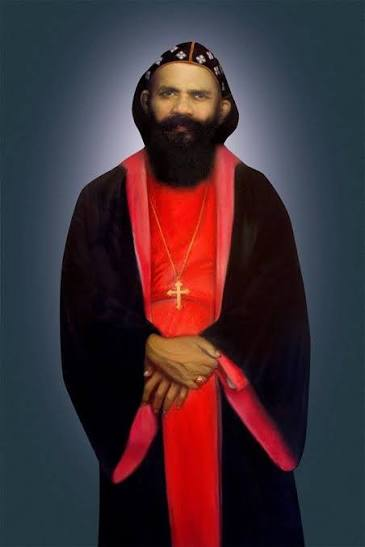
Philoxenus of Puthencavu

Popularly Puthencavil Kochu Thirumeni
ഗീവർഗീസ് മാർ ഫിലക്സിനോസ്
Metropolitan of Thumpamon, 1930–1951 Entombed at St. Mary's Cathedral, Puthencavu

K.T. Geevarghese was born on 10 June 1897 at Puthencavu on the banks of the Pamba, the second son of Thoma Kathanar of the Kizhakethallekal family and Rachelamma of the Chungathil family. He earned his Bachelor of Divinity at Serampore College, alongside a fellow student named P.T. Geevarghese, later Mar Ivanios of the rival Catholic communion, and an M.A. in English from Calcutta, before returning to teach at the M.D. Seminary School.

Ordained deacon and priest in 1929 by his mentor, St. Dionysius of Vattasseril, he was consecrated bishop the following year at Parumala Seminary, taking the name Geevarghese Mar Philoxenos and, as the youngest bishop of his generation, the affectionate title Kochu Thirumeni. He governed the Thumpamon diocese for two decades, in the course of which he founded or established a considerable range of institutions: Catholicate High School and a Teachers' Training College at Pathanamthitta, a Metropolitan High School at his native Puthencavu, Othera Dayara and the Bethel Aramana that later became the headquarters of Chengannur diocese, a theological college at Makkamkunnu, and a hospital at Eraviperoor. Alongside Dionysius VI, he was instrumental in directing the young Baselios Marthoma Mathews I toward theological study, and he led the Church's legal efforts to recover schools ceded to Mar Ivanios's rival mission during Dionysius VI's absence in Mardin.

He died on 17 April 1951 at the age of fifty-three, at the Marathamcode Mar Gregorios Chapel, where the room and bed he occupied are preserved as relics of his life. He was buried at St. Mary's Cathedral, Puthencavu, near the tombs of Mar Thoma VI and Mar Thoma VIII, and the site remains a place of pilgrimage for the faithful of Malankara. In 2013, on the sixty-second anniversary of his death, the Catholicate conferred upon him its title of Ratna Deepam.

Parish: St. Mary's Cathedral, Puthencavu

“His Presence was Joyful, His Voice Sweet, His Words Inspiring, His Manners Endearing, His Smile Unforgettable.”

Inscribed on his tomb
Bl. Gregorios of Pampady Commemorated Today
5 April 1885 – 5 April 1965
Blessed

Gregorios of Pampady

Popularly Pampady Thirumeni
കുര്യാക്കോസ് മാർ ഗ്രീഗോറിയോസ്
Metropolitan of Kottayam, 1929–1965 Entombed at St. Kuriakose Monastery, Pothenpuram

Kuriakose was born on a Sunday, 5 April 1885, in the village of Pezhamattam near Pampady, the fifth of ten children of Chacko and Ilichi of the Karingamattom family, a devout household that endured genuine hardship. Even as a boy he crossed the caste lines otherwise observed in his village without hesitation, regularly bringing coconuts and sweets to school for underprivileged classmates whom the social custom of the day held at arm's length.

Ordained sub-deacon at fourteen and trained at the Old Seminary under Vattasseril Geevarghese Malpan, the future Dionysius VI, he was ordained priest and, the following day, Ramban in 1906, and thereafter devoted himself to rebuilding the Pampady parish church, largely through the voluntary labour of villagers he had organised himself. In 1914 he withdrew to a mud dwelling on the wild, animal-haunted hills of Pothenpuram to live as a hermit, on a hill he himself named Mount Tabor; that solitary discipline grew in time into St. Kuriakose Monastery, its foundation stone laid in 1920 and its church completed three years later. He later served at Parumala Seminary, teaching Syriac to the deacons there and personally attending to the ailing Catholicos Mar Baselios Paulose I, who came to address him simply as "My Ramban."

On 16 February 1929, the day before his own succession, Catholicos Baselios Geevarghese II consecrated him Metropolitan under the name Kuriakose Mar Gregorios, the last bishop that Catholicos would personally ordain. As Metropolitan of Kottayam for thirty-six years, and trustee of the Catholicate Endowment from its founding in 1934, he became known above all for a life of continuous prayer credited with visible wonders, among them the sparing of plague-stricken Kunnamkulam and rain that broke a punishing drought in Pampady after three days of communal fasting. He received every visitor, of whatever station, with the same unhurried welcome, and the poet C.P. Chandy commemorated his gentleness toward all living creatures in a poem titled "The Golden Rose of Pampady." He died at St. Kuriakose Monastery on 5 April 1965, his own eightieth birthday, and was entombed on the hill he had once withdrawn to in solitude and named Mount Tabor.

Parish: St. John's Cathedral, Pampady

“Do good to man — he may turn back to hurt you. Do good to an animal; it will not bite you back. How much worse than a dog are some men?”

Attributed teaching, remembered by his devotees
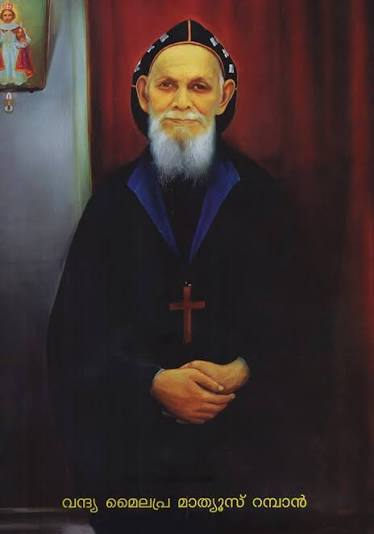
Bl. Mathews of Mylapra Commemorated Today
d. 4 September 1988
Blessed

Mathews of Mylapra

Popularly Mylapra Rambachan
മാത്യൂസ് റമ്പാച്ചൻ
Entombed at Mylapra St. Kuriakose Monastery

Deacon Mathews came of age in the direct company of two of Malankara's great spiritual fathers: Pampady Thirumeni, under whose hand he was ordained full deacon at Pampady Dayara, and Thoma Mar Dionysius, founder of the Mount Tabor Dayara, whom he accompanied on visits across the Niranam diocese. In both men he found a model of administration joined to prayer, which he set himself from a young age to imitate; while staying with Mar Dionysius at Puthiyacavu church in Mavelikkara, his sermons were already moving parishioners to tears.

Church tradition preserves one episode from these years with particular tenderness: a young woman, drawn by his preaching, came to his door hoping he might share his life with her. Deacon Mathews declined the sweets she offered and told her, gently but firmly, that both of them had already resolved upon a life given wholly to God, and that this new temptation could only be the work of the adversary seeking to undo two vows at once. He closed his door and returned to prayer. When false allegations later delayed his ordination, and Baselios Geevarghese II himself hesitated to advance him, Deacon Mathews accepted the setback without complaint, resolved to remain a deacon for as long as the Church required it of him. A month later, meeting him again at Pathanamthitta and finding that he had grown a beard, the Catholicos remarked simply that the Spirit was calling him to the priesthood after all. He was ordained on 8 May 1932 at Pathikkara Church, Mallappally, and is remembered today at the monastery bearing his name in Mylapra, where he is entombed.

Parish: St. George Church, Mylapra

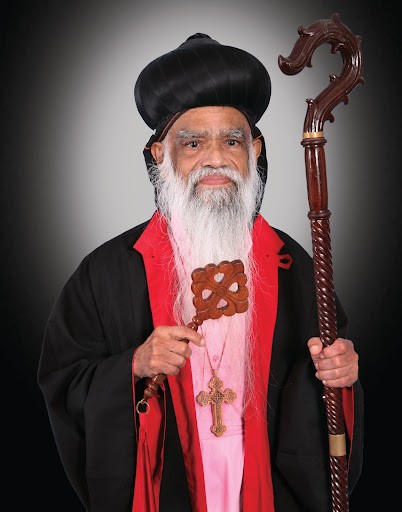
Bl. Barnabas of America Commemorated Today
9 August 1924 – 9 December 2012
Blessed

Barnabas of America

Mathews Mar Barnabas
മാത്യൂസ് മാർ ബർന്നബാസ്
Metropolitan of Idukki & the American Diocese Entombed at St. Peter & St. Paul's Church, Valayanchirangara

Born a twin to Kuruvilla and Mariamma of the Kidangethu Thompra family at Valayanchirangara, the boy called Mathukutty came from a household already marked by the priesthood: both his grandfather and his uncle had served as Orthodox priests before him. He resolved to become a monk at the age of seven, adopted a vegetarian discipline he maintained for the rest of his life, and spent his school vacations at the Gathsemon Dayara in Piramadam under his uncle, Fr. K.P. Paulose, absorbing the rhythms of monastic life at an age when most children were still at play.

His formal education pursued an unusually broad course: a degree in Biology from Madras Christian College, a Master's in Botany from Osmania University while serving the Secunderabad parish, and eventually a B.D. from Serampore University by way of Bishop's College, Calcutta, alongside a theological formation begun under his uncle and continued at the Orthodox Theological Seminary, Kottayam. Ordained deacon in 1943 by Baselios Geevarghese II at his home parish, and priest in 1951 by Augen Mar Thimotheos, he spent decades in the Church's service as a teacher, seminary warden, and hospital chaplain before the Malankara Association elected him to the episcopate in 1977.

Consecrated Mathews Mar Barnabas in 1978, he served as assistant bishop of the Angamaly and Kottayam dioceses, then as founding Metropolitan of the newly formed Idukki Diocese from 1982, and, from 1992, as Metropolitan of the undivided American Diocese, later divided into its northern and southern sees. He retired from administrative duties in 2011 and withdrew to the Monastery of St. Kuriakose the Martyr, where he spent his final months. He died on 9 December 2012 and was buried at his home parish, St. Peter and St. Paul's, Valayanchirangara, the same church where, as a boy of seven, he had first resolved to give his life to God.

Parish: St. Peter & St. Paul's Church, Valayanchirangara

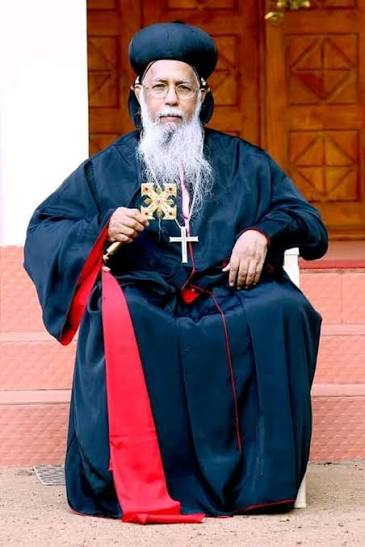
Bl. Ivanios of Kottayam Commemorated Today
14 November 1940 – 12 April 2013
Blessed

Ivanios of Kottayam

Geevarghese Mar Ivanios
ഗീവർഗീസ് മാർ ഈവാനിയോസ്
Metropolitan of Kottayam, 1985–2013 Entombed at Mar Baselios Dayara, Njaliyakuzhy Theologian & writer

George was born on 14 November 1940 in Madurai to Mar Thoma parents, K. George and Annamma, and the family relocated to Kollam when he was four. It was during his college years that he grew close to the Malankara Orthodox Church, drawn by a friendship with Metropolitan Mathews Mar Coorilos of Kollam, later Baselios Marthoma Mathews II, that would shape the remainder of his life. At twenty-one he received chrismation into the Orthodox Church, and two years later was ordained deacon by the same Mar Coorilos, before leaving for England to live among the Cowley Fathers and complete an M.A. in Christian Theology at Oxford.

He returned to Kerala in 1971 to teach Hebrew, Syriac, and Greek at the Orthodox Theological Seminary, Kottayam, at the invitation of Philipose Mar Theophilos, and was ordained priest there in 1973. A cancer diagnosis in 1978 was treated successfully at the Adyar Cancer Institute, Chennai; the following year he was ordained Ramban by Baselios Marthoma Mathews I. Elected to the episcopate by the Malankara Association in 1982, he was consecrated Geevarghese Mar Ivanios in 1985 and appointed Metropolitan of the Kottayam Diocese, an office he held for the remainder of his life.

He was, above all, a theologian and a contemplative, remembered for slender, luminous Malayalam works on the interior life, among them Mounathinte Lavanyam ("The Beauty of Silence"), Nirlepam ("Untaintedness"), and Hridayashuddhikaranam ("Purification of the Heart"), writing that continues to be read and has since been translated into English. He died on 12 April 2013; his funeral, led by Baselios Marthoma Paulose II, was held the following day at Mar Baselios Dayara, Njaliyakuzhy, where he was laid to rest.

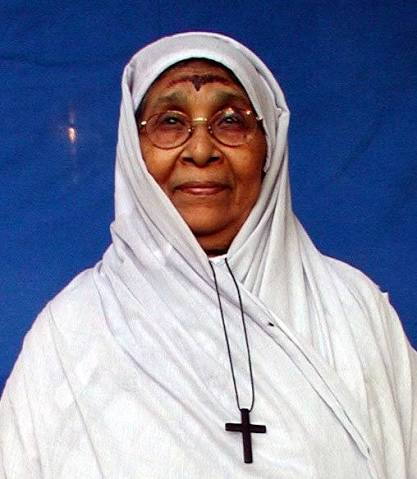
Mother Susan Kuruvilla Commemorated Today
26 July 1927 – 29 May 2018
Blessed

Susan Kuruvilla

Popularly Ammachi
മദർ സൂസൻ കുരുവിള
First stigmatic of the Malankara Church Founder, Mar Gregorios Ashram, Mulanthuruthy

Susan was born on 26 July 1927 into the Thykkadavil family of Valanjavattom. As a child, praying alone in church, she reported hearing a voice instruct her: "Go and mend my broken church. Observe lent, prayer, and fasting for forty-one days, for I would make you a useful weapon for me." She kept the instruction to herself and told no one. That Christmas, visiting her grandmother's house, she was keeping the evening prayers when she saw the crucifix on the wall begin to glow and stir; taking it at first for a trick of candlelight, she continued to pray until every candle in the room extinguished at once, and Christ himself, bearing the wounds of the crucifixion and a wooden cross upon his shoulder, descended from the wall toward her. Trembling, she knelt. He asked whether she believed him to be the Son of the Living God, and whether she was willing to follow him, taking up his cross, whenever he should call her. She hesitated, asking first to seek her parents' permission; when he pressed her as to whom she loved more, her parents or God, she answered that she loved nothing more than God, and was blessed with the cross. A spiritual uplifting settled upon her that, she would later say, never departed.

In her early teens the promised forty-one days of fasting followed, and on the last of them, during evening prayer, she reported a shining cross descending to rest upon her head, and felt for the first time the grace that would mark the remainder of her life. Not long afterward, on a Good Friday at church, a searing pain took hold of her entire body, and the wounds of the Passion opened upon her hands, feet, right side, and in a ring about her head, the first appearance of the stigmata that would recur, without medical explanation, for the rest of her life. At sixteen she was consecrated by the Catholicos and entered religious life as Mother Susan Kuruvilla, taking with her bishop's blessing the white sari and veil that became her habit; on Good Fridays she wore instead a habit of maroon, and relived the Passion for three and a half hours.

From that time onward, every Tuesday and Friday, and throughout the forty days between Christ's Resurrection and Ascension, she is said to have suffered the agony of the crucifixion afresh, her wounds opening and bleeding as she prayed before passing into a still, radiant trance, a state of grace in which, her devotees held, she was able to hear and answer the prayers brought to her. The Church itself twice examined the phenomenon: once by having her drink, drop by drop, water mixed with frankincense from the tomb of Christ, which reportedly brought on renewed bleeding before it had touched her lips three times; and once by seating her in vigil at a bishop's tomb in North Kerala, where, on the third day and before witnesses, her wounds are said to have opened once more. Physicians examined her across the decades and reached no alternative explanation: Dr. Achy Iype Kovoor in the 1940s, and, in 1977, during her first visit to the United States, a medical team led by Dr. Eugene Ged, which reported that the blood from her wounds was genuine and that her condition lay beyond ordinary medical understanding.

At twenty-three she ceased eating solid food; not long afterward sleep left her as well, though she maintained three hours of nightly meditation, during which, she said, she held regular converse with Christ. Asked how she endured this, she would answer simply that she lived only by the grace of God, and that whatever He willed could be borne. Alongside the stigmata, the faithful attributed to her other gifts: healing, the casting out of afflicting spirits, and visions in which Christ, the Virgin, and the saints appeared to her in prayer.

In 1973 she established the Mar Gregorios Ashram at Mulanthuruthy, the birthplace of her patron, St. Gregorios of Parumala, to shelter orphans, the destitute, the aged, and the disabled without regard to caste or creed, providing the children free schooling through college as well as vocational training. A chapel raised in 1991 through the contributions of prayer groups in the United States and Canada keeps the feast of St. Gregorios each November, with the feasts of St. George and St. Mary observed in May and August. From 1981 she made repeated visits to Canada, where the devotees she gathered there founded a registered charity, the Mar Gregorios Asram Charitable Association, to support the Ashram's work from abroad. She died on 29 May 2018, not long before her ninety-first birthday, and her Ashram chapel keeps her feast still each 26 July, the day of her birth.

Parish: Valanjavattom St. Mary's Church

“It is more blessed to give than to receive.”

Attributed saying, remembered by her devotees

Sources for the accounts on this page are listed with the rest of the site's sources on the homepage.