In Remembrance

Martyrs of Malankara

Martyrs are those who have given their lives for Christ, and since antiquity Christians have studied the histories and narratives of the martyrs. Behind the Malankara Church’s history of self-governance and independence lies a history that can never be forgotten: the struggles and sufferings of courageous believers.

The Nasrani community developed through interaction with other communities. The Roman and Syrian camps held out before it the inducement of “faith-obedience” and sought to bind it in the shackles of subjugation. The Malankara Nasranis took refuge solely in the way and faith of Mar Thoma, who was born in Christ, and they contended and prevailed. Their heroic history remains relevant today.

In the name of standing with the Holy Church and refusing to surrender its independence and positions, many martyrs were killed over the course of Church history, both by design and unintentionally. Those who were attacked and isolated alongside them are not few. In one form or another, these attacks continue to the present day.

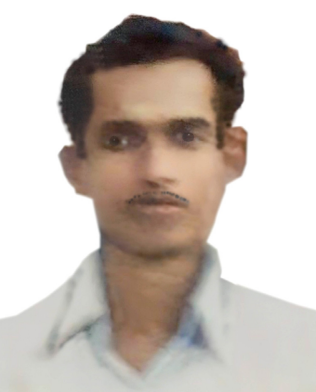
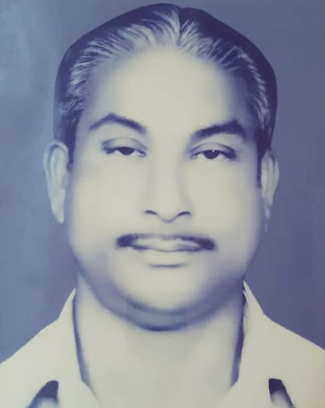
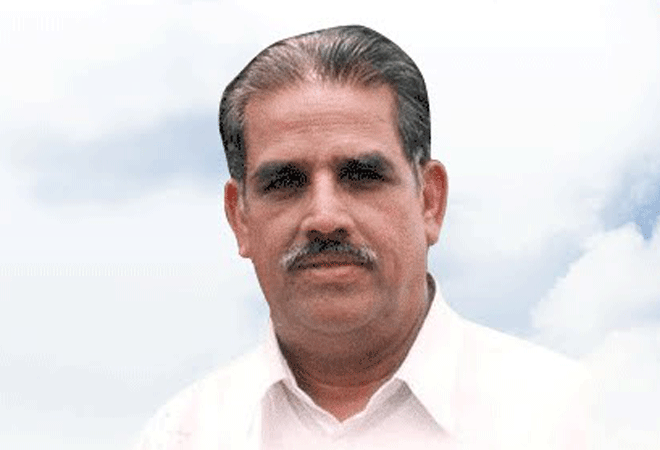
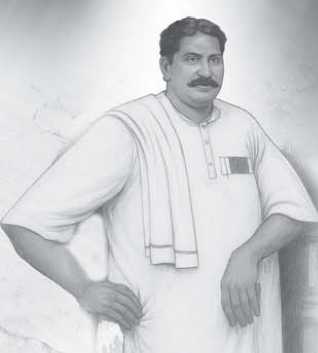
Varkey Asan (Anapapy), Ponodath Mathai Kathanar, Chalil Korah, Cheppad Kochunnunni, Kadamattom Onankunju, Thottappattu Kuriakose and Malankara Varghese, among others, died as martyrs at the hands of the breakaway faction.

We do not forget that there are also unknown ones among them.

A candle has been lit in memory of the martyrs.

Varkey Asan (Anapapy)
Martyred 31 March 1912 (Meenam 18, 1087)

Varkey Asan (Anapapy)

വർക്കി ആശാൻ (ആനപാപ്പി)
Parish: Karackal St. George Orthodox ChurchTeacherChief bodyguard to St. Dionysius of Vattasseril

The life of Varkey Varghese, bodyguard to St. Dionysius of Vattasseril, the luminary of the Malankara Church, remains a source of enduring sorrow for the Church. He was the only son of Varkey Asan of the Panickerveettil family, near Karackal St. George Church in Peringara, near Thiruvalla, and of Mariamma of the Karackal Chakkumveettil family. He was popularly known as “Anapapy” (aana meaning elephant). Moved by devotion to the Church and encouraged by such eminent figures as Mr. K. M. Mammen Mappila, Mr. K. C. Eapen and Rev. P. T. Geevarghese Kathanar, he was appointed chief of the bodyguards of St. Dionysius of Vattasseril, who guided the Church through its crises.

Anapapy was well educated and proficient in martial arts; he was a teacher, a devoted son of the Church and an exceptional wrestler. His assassins, together with the Patriarchal partisans who had commissioned them, were governed by a single calculation: unless Varkey Varghese were eliminated, St. Dionysius of Vattasseril could not be removed. Consequently, Anapapy, then only thirty-five, was cruelly killed as the result of a conspiracy. It is undisputed that he was killed on Meenam 18, 1087 (March 31, 1912), and that the following day was a Monday. Many historians have attempted to establish his date of birth without success. True to his name, he was of giant physique, and he lived under constant threat of death.

Anapapy studied up to matriculation (SSLC) and, like his father and grandfather, began his working life as a teacher, serving in a government lower primary school near Kallooppara. His family was prosperous, his finances were sound, and his manner of living reflected the standing of the period. His sister Annamma was married to Kochukunju of the renowned Inchakalody family of Chengannur. Anapapy himself married Annamma of the Attupuram family in Peringara. When his wife’s relatives prepared to sell the Attupuram property, he sold his own Karackal land rather than allow others to acquire it, purchased that property and settled there; this is how he came to reside at Attupuram near Peringara.

The historical record notes that he received an order appointing him to a Ranger post in the Excise Department of the Travancore Government, but that he did not take up the post and went to Kottayam instead.

The background

St. Dionysius of Vattasseril held that surrendering the ownership and independence of the Malankara Church to Patriarch Abdulla would amount to a betrayal of the Church. A substantial section of the Church objected to Abdulla’s methods of acquiring wealth and to the practices that had produced laxity within the Church, while another section prepared to support the Patriarch. The Church thus divided into two camps, and the rivalry between the factions reached its height.

The Old Seminary at Kottayam was the seat of the Malankara Metropolitan and the centre of the Church, as well as its principal seminary. Its possession lay with three trustees. The clerical and lay trustees who opposed the Metropolitan devised a means of bringing the seminary wholly under their control, namely the suspension of St. Dionysius of Vattasseril. Konat Mathen Malpan and Akkara C. J. Kurien anticipated that, were the Patriarch to suspend him, the seminary would pass exclusively to them, and the Patriarch carried out the suspension eagerly, as they had intimated.

Police proceedings before the Executive Magistrate were then pending concerning control of the seminary. In that summary case, the suspension offered an easy route to seizing the property. After the Patriarch’s decree arrived, the opposing faction in the case requested the clerical and lay trustees to remove St. Dionysius of Vattasseril. In 1912, however, the First Class Magistrate of the Kottayam Division ruled in favour of the Metropolitan’s own possession. The trustees appealed to the High Court, which held that the seminary was in the joint possession of the three trustees. Following that verdict, attempts to seize the seminary and outbreaks of violence ensued. The lay trustee based in Kottayam sought assistance from prominent local ruffians, and efforts began to eliminate St. Dionysius of Vattasseril. Bodyguards thus became indispensable to the Malankara Metropolitan, and Anapapy (Varkey Asan) was appointed as their chief.

Reports reached the Church that Patriarchal partisans were conspiring against St. Dionysius of Vattasseril in a variety of ways. Many persons from southern parishes such as Thiruvalla, Niranam and Mavelikkara assembled at the Old Seminary, and guards were appointed to ensure that no harm befell him. Anapapy was among those appointed from Thiruvalla, having been sent by K. M. Mammen Mappila (Kochu Mammen Vakil), as the latter stated in his testimony in the Vattippanam case. The effort was led by K. C. Eapen, known as “Kerala Deenabandhu.” As Anapapy departed for Kottayam, K. C. Eapen, the brother of K. C. Mammen Mappila, gave his blessing by tying a kasavu kavani around his neck and draping a ponnada (honorary shawl) over him.

In a 1992 letter to Adv. P. C. Mathew, Divyasree Manalil Yakob Kathanar, secretary to St. Dionysius of Vattasseril, wrote:

“When the opposing faction created trouble in the seminary and some Muslim rowdies began abusing the Metropolitan and harassing him, it was the Thiruvalla leaders who brought Anapapy to protect him.”

Manalil Yakob Kathanar, letter to Adv. P. C. Mathew, 1992

The murder

Anapapy’s assailants intended to intimidate, seize and beat the guards, so that the guards of St. Dionysius of Vattasseril would be isolated and the seminary subsequently captured. A secret conspiracy was hatched by certain irreligious persons possessing physical strength, wealth and influential connections with the authorities. Specifically, on Meenam 18, 1087 (March 31, 1912), at about 6 pm, on the sand-bank of the Meenachil river north of the Old Seminary, near Govindapuram in Kottayam, the first to seventeenth accused formed an unlawful assembly. They were armed with sticks, sword-sticks and pestles or clubs. Knowing that Anapapy’s death was likely, they deliberately beat and crushed his head and body with the sticks, struck him with the clubs and stabbed him with swords (Police FIR).

Under the heading “A Blood Offering for Anapapy,” Fr. Paret recorded the event as follows: on Meenam 18, 1087, Varkey Varghese of Attupuram, Peringara, near Thiruvalla, a great wrestler worthy of the name Anapapy, was offered as a sacrifice on the sand-bank beside the seminary.

At that time Fr. P. T. Geevarghese was deeply engaged in communal affairs. While preparing to leave the Malankara Church and join the Roman Church (he himself stated that this was motivated not by concern for the soul’s safety but by a desire for perfection), he wrote in Girideepam:

“Had such a murder not happened there, one wonders what the readers would now need to be considering. Terrible and unspeakable things could have happened there. Only because the yard of the Old Seminary drank human blood did nothing further happen. Everyone understood that this was the thirst the Syrian community had long had.”

Fr. P. T. Geevarghese, Girideepam

Anapapy’s blood, it may be said, washed away the strife of that age. A man of giant stature, he brought to an end, through the shedding of his own blood, the turmoil that had long been visible within his community. The title “martyr” (rakthasakshi, literally “blood-witness”) applies to him in the most literal sense.

Dr. Dias, the medical officer who first examined Anapapy’s extraordinary physique after the body was brought to the hospital, testified as the 21st witness in the case: “The deceased Varghese was a wrestler and an extraordinary strong man. In my service I have seen very few people with such a large, well-built body.”

In the Anapapy case, the testimony of St. Dionysius of Vattasseril is likewise of considerable significance:

“…I have been living permanently at the Kottayam Syrian Seminary for about four years. I know the dead Pappy. On the evil counsel of some people, certain persons pushed and stabbed Pappy and endangered him; that is what I know. It happened on the sand-bank north of the seminary. Pappy was from Thiruvalla. Pappy came to Kottayam for my protection; the Thiruvalla church people sent him. He first came toward the end of Kumbham. He stayed there 10–15 days and went to his house. Then Pappy came again on the day of the incident, after daybreak [five or six nazhika]. Besides Pappy, there were other people for my protection…”

St. Dionysius of Vattasseril, testimony in the Anapapy case

On Wednesday, April 3, 1912, a report in Malayala Manorama conveyed the details of the murder to the public. It stated that a man named Varkey, who lived with Mar Dionysius of Malankara and his associates, had been severely beaten at the seminary landing by certain Muslims and others “last Saturday around five in the evening” and left near death, and that he died in hospital the following day. The report added that the news could not fail to grieve any human heart. While the people in the seminary had gone in for evening prayer, Varkey, thirsty, unarmed and unsuspecting, had gone to a nearby tea shop, where the men lying in wait ambushed him and beat him senseless.

The cruelty of the act may readily be imagined. By the time he was brought to the hospital, Varkey’s life was practically at an end. The Assistant Surgeon immediately informed the Taluk First Class Magistrate, who attended at once and recorded Varkey’s dying declaration. After his death the Assistant Surgeon examined the body, noting that the tendon of the right heel had been severed and that the skull had been shattered into eleven pieces. These findings were cited in the certificate as the cause of death.

On Monday the body was removed from the hospital. With the sympathy of the congregation of Kottayam Cheriyapally and others, and under escort, it was buried in the Puthenpally cemetery, the burial ground of Kottayam Cheriyapally. The parishioners expressed their sympathy and their helplessness. A memorial stone was later erected there in his name.

Undoubtedly, Varkey Varghese, known as Anapapy, remains an indelible wound in the history of the Malankara Church. This young man laid down his life for a holy man and for his community, and the Church will forever sing the praises of his sacrifice.
Ponodath Mathai Kathanar
Attacked 10 September 1921 · Died 23 December 1921

Ponodath Mathai Kathanar

പൊന്നോടൊത്ത് മത്തായി കത്തനാർ
Parish: Mulanthuruthy St. Thomas Orthodox CathedralVicar of the parish

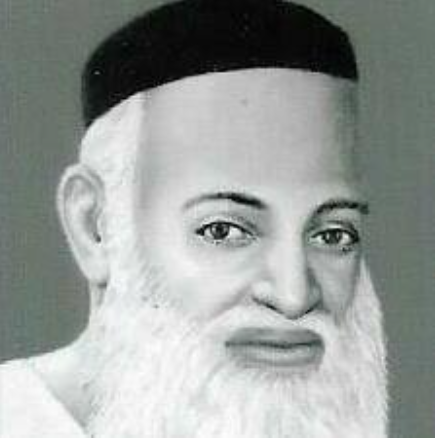
Among the lay (almayakkar) martyrs, who include Varkey Varghese (Anapapy), killed while guarding St. Dionysius of Vattasseril, there are many. Among the clergy there is one: Ponodath Mathai Kathanar (of Thoppil), vicar of Mulanthuruthy Marthoman Church.

He was born in 1872 into the Thoppil family, a grandson of Cheriyathu Cheriya Kathanar. After his primary schooling he commenced priestly formation as a disciple of Srambikkal Geevarghese Mar Gregorios of the Niranam Diocese (St. Gregorios of Parumala). St. Gregorios of Parumala accepted this disciple, whom he had received from his own native region, with great affection and assumed responsibility for him. Soon after accepting him as a disciple, he conferred upon him the order of Korooyo, and himself conferred all subsequent orders up to Kasheesha (priest). After ordination he became vicar of his home parish, Mulanthuruthy.

Out of affection for this disciple, St. Gregorios of Parumala arranged his marriage to Aachi, a girl of the Vayaliparambil house of the Angamaly Akaparambu parish, personally deliberating on and settling the marriage and the other arrangements. He supplied from his own funds the dowry that Mathai Kathanar received along with the rest, purchased a small plot of land for him and had a cope (kappa) stitched for him. Contemporaries described him as “capable in everything” and as a truly respected clergyman. He had four sons and a daughter.

At that time Pulikkottil Joseph Mar Dionysius, the Malankara Metropolitan, held him in special affection and trust, as did Vattasseril Geevarghese Mar Dionysius after him.

When St. Dionysius of Vattasseril refused to sign over the secular authority of the Malankara Church, Patriarch Abdulla II suspended him without cause on Edavam 26, 1911. He rejected the suspension as uncanonical. The Antiochian partisans who favoured the suspension then took Kochuparambil Paulose Mar Koorilos of the Angamaly Diocese as their leader and began agitating against St. Dionysius of Vattasseril and the Church. This faction wielded considerable influence in the northern parishes, which fostered bitter factionalism.

Mathai Kathanar adopted a firm position everywhere and supported the canonical Metropolitan, St. Dionysius of Vattasseril. It posed no difficulty for him that Mar Paulose Koorilos, whom the opposition styled the “Malankara Metropolitan,” was his own cousin (the son of his father’s sister). He succeeded in retaining the majority of the people of Mulanthuruthy, together with many members of other parishes.

Even while serving as vicar, he officiated at Vettickal Dayara and at the chapel (a thatched hut of palm leaves) that St. Dionysius of Vattasseril had established on the site where Carmel Dayara now stands. Although he entrusted his turn at the wealthy Mulanthuruthy church to fellow priests, he continued to conduct services in these churches without lapse and without fear.

The breakaway faction (later the Patriarchal faction) recognized that taking Mulanthuruthy was impossible without eliminating Mathai Kathanar. They attempted to suspend him through Paulose Athanasios (of Aluva), whom they regarded as the Malankara Metropolitan. The attempt failed: three priests of the breakaway group in the Mulanthuruthy church likewise refused to concur with the suspension.

His death. On Chingam 25, 1097 (September 10, 1921), Mathai Kathanar and Chalil Korah were standing and conversing on the second level of the church building (pallimeda) at Mulanthuruthy. A schoolteacher, frenzied with devotion to Antioch, rushed at them and struck them with a log of firewood, felling both men. Mathai Kathanar never recovered from the fall. After a few months he died, on December 23, 1921, and was buried in the Mulanthuruthy church. The accused was held in a Kochi government jail, where he became deranged; after his release he wandered about and eventually died.

In the interim, St. Dionysius of Vattasseril and Kundara Kochu Metranachen (later Mar Baselios Geevarghese II Catholicos) came to Mulanthuruthy to visit him on his sickbed, and together administered the sick-anointing (kandeela) to the Achen. His sister’s grandson was the late Dr. Paulose Mar Gregorios, Metropolitan of Delhi.

Chalil Korah
Attacked 10 September 1921 · Died 12 September 1921

Chalil Korah

ചാലിൽ കോര
Parish: Mulanthuruthy St. Thomas Orthodox CathedralHereditary lay leader (manushyam) of the parishSocial workerFirst president of the Mulanthuruthy PanchayatMember of the Malankara Church Managing Committee

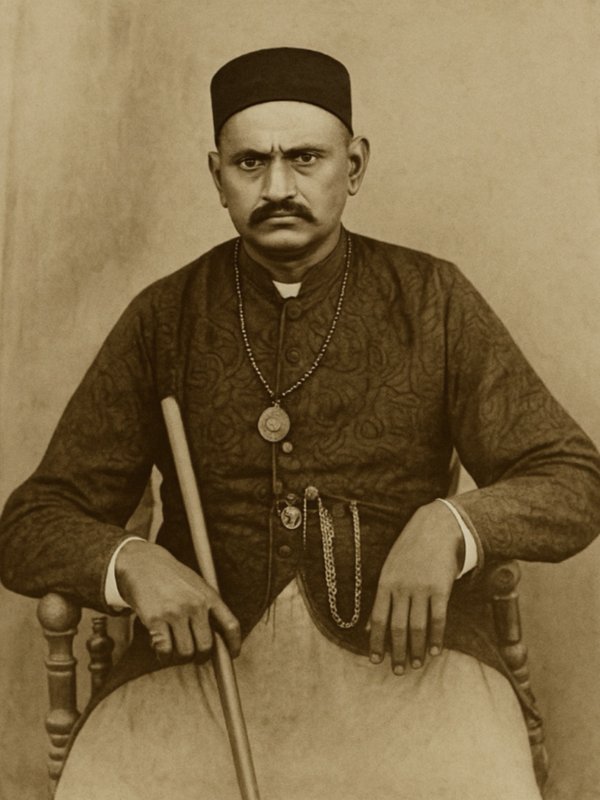
Mathai Kathanar’s closest friend and associate was Chalil Korah. A social worker and popular leader, he stood steadfastly beside the Achen at all times. A long-standing member of the Malankara Church Managing Committee, he was a man of humane character within the Mulanthuruthy church. The heads of the Chalil family held the hereditary lay leadership (manushyam) of Mulanthuruthy church.

Korah, who may justly be called the architect of modern Mulanthuruthy, was the son of Chalil Kunjicheria and Konat Unnichar. Mulanthuruthy St. Thomas School, the first English school of the Malankara Church in the northern region, was founded through his efforts in 1887 and handed over to the government in 1914. The government hospital, the registrar’s office, the post office and the girls’ school in Mulanthuruthy, the Chottanikkara–Piravom road and the restoration of the church were all his work. When the Mulanthuruthy Panchayat was constituted, its first president was Chalil Korah. On two occasions the Maharaja of Cochin conferred upon him the Keerthimudra (honour), and he sat in the royal durbar. After his father’s death in 1891 he assumed the lay leadership of the church, and he was counted among the popular leaders who stood with St. Dionysius of Vattasseril.

Mar Alvares and the Relief Fund

Antonio Francisco Xavier Alvares, Mar Julius, was Metropolitan of the Indian, Goan and Ceylon parishes. As the church historian Dr. M. Kurian Thomas observes, a longstanding bond existed between him and Chalil Korah.

From the outset, the Mar Alvares Mission struggled with shortages of manpower and financial insecurity. He repeatedly appealed to the Malankara Church for priests and funds. For social and linguistic reasons only temporary priestly service was feasible, and the Church, constrained by custom, could not extend substantial financial assistance. Nevertheless, Pulikkottil Joseph Mar Dionysius V and Vattasseril Geevarghese Mar Dionysius VI assisted him financially through many parish churches.

St. Gregorios of Parumala corroborates this. In a letter of April 7, 1899, to Patriarch Ignatius Abdul Masih II, he wrote:

“…Aboon Julius Alvares is now in Colombo… his and his disciples’ work is mostly among Catholics, but a great deal of money is needed. Because of the lack of money he does not act as he would like. He and his disciples constantly ask us for money. From where shall we give them? We need money more than he does. But from our own poverty we are helping them considerably to establish them…”

St. Gregorios of Parumala, letter of 7 April 1899

Following Abdulla II’s illegitimate suspension of St. Dionysius of Vattasseril, Mar Alvares declared his support for him through a public decree on June 15, 1911. Dr. Kurian Thomas considers it likely that Chalil Korah, active in communal affairs, would have become acquainted with Mar Alvares at that time.

False rumours spread by Roman Catholics asserted that Mar Alvares had died (1921). On Sunday, May 29, 1921, a meeting of the Mulanthuruthy parish was held at Chalil Korah’s church. The meeting was informed that the rumour of Mar Alvares’s death was false, that his present condition was pitiable, and that his good deeds on behalf of the Syrian Church must not be forgotten. The following resolutions were adopted:

  • to begin efforts to assist Mar Alvares immediately;
  • to commence a collection for a Mar Alvares Mission Relief Fund;
  • to form local committees in other parishes;
  • once sufficient funds had been raised, to send a deacon or priest to Goa to construct a chapel and residence for Mar Alvares.

A ten-member committee was constituted, with Chalil Korah as president and Chathuruthil Mathai Varkey as secretary and treasurer.

A detailed report appeared in the July 1921 issue of the Catholic Sabha magazine, and the magazine’s staff gave it their full support, yet the Relief Fund never materialized. Within two months of that report, Chalil Korah’s martyrdom left the effort without a leader. No assistance comparable to that of the Mulanthuruthy congregation ever came from elsewhere. As a consequence, the independent Catholic movement of Mar Alvares, once spread across South India and Sri Lanka, has dwindled to the Konkani community in the Brahmavar diocese alone.

His death. On Chingam 25, 1097 (September 10, 1921), while Mathai Kathanar and Chalil Korah were conversing on the second level of the church building, they were attacked as described above. Chalil Korah died two days later, on Chingam 27 (September 12, 1921).

No photograph is known to survive

Martyred 27 Chingam 1103 M.E. (12 September 1927)

Cheppad Kochunnunni

ചേപ്പാട്ട് കൊച്ചുണ്ണൂണ്ണി
Parish: Cheppad St. George Orthodox Church

As part of the Antiochian Patriarch’s scheme, the Patriarchal faction installed Ottaithaikkal Thomas Kathanar, under the name “Dioscoros,” in place of the late Mar Severios of the Knanaya community, motivated by a desire to diminish the radiance of St. Dionysius of Vattasseril. In September 1927, Elias III also consecrated Michael Kathanar, son of John Upadeshi of Alummoottil, Kayamkulam, as a rival “Dionysius.”

This produced considerable difficulty in the affairs of the Church. The “rival” Metropolitan attempted to oppose St. Dionysius of Vattasseril and to seize the community’s properties and personnel, but achieved nothing beyond factionalism and rivalry. Exploiting his influence from Kottayam southwards, Michael Dionysius attempted to enter many churches by force and conduct services, occasionally provoking violent clashes.

On Chingam 27, 1103 (September 12, 1927), Kochunnunni of Cheppad Puthenveettil became a martyr in the clash that occurred when Michael Metropolitan entered Cheppad church. He was buried in the Cheppad church cemetery.

Three accounts of this incident are recorded in Paret’s Malankara Nasranikal, Vol. 4:

  • The first states that Michael Metran went to Cheppad church, that the factions clashed upon his entry, and that he struck with his hand the sister’s grandson of the Cheppad Metran (the brother of Philipose Ramban). Others then attacked with weapons, and within two or three days a man died.
  • The diary entry of St. Dionysius of Vattasseril (Chingam 29, 1103, written at Thiruvananthapuram) states: “Last Saturday the 25th, in the evening, Michael Metran secretly entered Cheppad church and a brawl broke out. The Metran’s stick broke into three pieces and he ran away. One man caught in the brawl was struck and died.”
  • The diary entry of Fr. Paret (Paret Mathews, later Mar Ivanios), written at Bethany, Thiruvalla, in a note of Chingam 30, records that the Metran struck the Achen and the Achen struck the Metran, that the Metran’s silver staff broke, and that “during the clash, Achen’s brother’s son was beaten and died.” This account was relayed by Mavelikkara Mathai Panicker, the younger brother of Geevarghese Mar Ivanios of Bethany.

Taken together, these accounts leave no doubt that the event occurred. It is also treated, with names and detail, in Cheppad Philipose Ramban’s Poorvakala Smaranakal (“Reminiscences”), which relates:

“…After supper at home, while chatting, I heard the church bell ringing hard. Shortly after, the sacristan came running: ‘Michael Metran Achen has come into the church; Pulimoottil Thomas, Evarathu Kizhakkethil Mathunni, Kannimala Achen and Thayyil Achen are all there.’ I went to the church at once. Both factions had come running at the bell. Seeing me, my side came and asked what was needed. ‘We can’t just stand watching. The Metran Achen did not enter the church peacefully; it must be made public,’ they said, and rushed into the church.

The one who went and stood at the head was a deacon (shemmasan), raising the Thirumeni’s amsavadi (ceremonial staff). They told him, ‘You are not the one who should hold the amsavadi in this church,’ and snatched it away. When the other faction came and grabbed at it too, the staff broke into pieces in the tussle. Michael Metran Achen, frightened, fled into the madbaha (altar). The Thayyil Achen who was inside saw this and ran out through the madbaha’s north door. He climbed onto a prop tied against the back of the wall, lost his footing, fell on his back and slid down. Somehow he got up and fled; that is how frightened he was.

Then three policemen arrived and put everyone out of the church. The police took the staff’s pieces; the golden cross set between the staff’s two serpent heads and the other parts were never recovered. They kept the Thirumeni seated in the church, put everyone else outside and shut the doors. One policeman stood guard, and the other two began writing the mahazar. People crowded around, and I went home. On Sunday, Chingam 26, 1103, Michael Metran Achen celebrated Qurbana at Cheppad church. By then a Magistrate’s order to leave the church immediately came, and he left. News of his entry into Cheppad church and the scattering of the staff spread in all four directions like wildfire.”

Cheppad Philipose Ramban, Poorvakala Smaranakal

Kochunnunni’s death at Puthenveettil. St. Dionysius of Vattasseril was then in Thiruvananthapuram. Philipose Ramban’s account continues:

“…Thinking he should be told every detail, I went to Thiruvananthapuram and asked. My brother-in-law, Muthakunju of Alummoottil, was also there. A telegram came while we were in Thiruvananthapuram: ‘My brother, Kochunnunni of Cheppad Puthenveettil, has died.’ He had been taking a milk-based tonic, and died of a blow in the scuffle in the church. That was Chingam 27, 1103. We returned to Cheppad at once and held Kochunnunni’s funeral.

In the ‘stick-clash’ in the church, one man who had gripped Kochunnunni hard from the opposite side was also in the crowd that came running when the news of the death spread. Kochunnunni’s dog lay silently in the yard. That dog got up, went through the crowd, gave the man a good bite on the leg, tore at it with a growl and ran away. Everyone was astonished. The dog never came back home; it left the house and went off somewhere.”

Cheppad Philipose Ramban, Poorvakala Smaranakal

Factional rivalry has caused the deaths of martyrs across many generations, and innocents such as Kochunnunni are frequently its victims.

Kadamattom Onankunju
11 August 1951 – 15 February 1976

Kadamattom Onankunju

കടമറ്റം ഓനൻകുഞ്ഞ്
Parish: Kadamattom St. George Orthodox Church

The 1970s constituted the most intense phase of the second division of the Malankara Church. On February 16, 1975, at Niranam church, five bishops were consecrated on the Metropolitan side. In August–September of that year, Baselios Augen I relinquished the offices of Malankara Metropolitan and Catholicos, Mathews I was enthroned as Catholicos, and Augen I died on December 8.

The sudden emergence of new leadership was a severe blow to the breakaway faction. The unauthorized Metropolitan positions assumed earlier by Perumbilly Fr. Geevarghese and Cheruvally Fr. Thomas had already paved the way for deep upheaval and factionalism in the northern region of the Church. It is undeniable that many were misled by the skill of these two men, who were adept at any dramatic performance necessary to retain followers. The ceaseless efforts of such figures to sustain their positions, together with factional animosity, led to bitter disputes in churches.

At this juncture, the newly consecrated Mar Baselios Marthoma Mathews I and the new Metropolitans were accorded the most regal reception Kerala had witnessed, on February 15, 1976, in Ernakulam. The report in that month’s Malankara Sabha magazine described it as the most heartfelt and stirring reception ever given on a visit to Ernakulam, held on the evening of Sunday, February 15, 1976. Ernakulam, adorned with arches and banners, became a sea of people. Accompanied by hundreds of cars from MD Seminary, Kottayam, the Catholicos and the Metropolitans Paulose Mar Gregorios, Geevarghese Mar Osthathios, Stephanos Mar Theodosios and Joseph Mar Pakkomios proceeded via Ettumanoor, Koothattukulam, Muvattupuzha, Kolenchery and Thripunithura and reached the city outskirts at 3:30 pm.

Veekshanam (the mouthpiece of Kerala’s then-ruling Congress) and Malayala Manorama carried reports:

“Thousands of faithful who arrived by vehicle from various parts of Malankara showed their support for the Church’s strong leadership and faith.”

Veekshanam

“Today’s reception procession in Ernakulam spread the light of spiritual vitality. This ancient city has not seen so large a spiritual rally in recent times, and it was entirely under the lead of the northern dioceses. Like waves rolling in off the Arabian sea, lakhs of people poured through all of Ernakulam’s roads. No other reception with so many motor vehicles has ever visited Ernakulam.”

Malayala Manorama

This reception, held under the leadership of the northern dioceses, unsettled even the then-ruling establishment. It was unlike the paid-publicity “praise-and-glorification” events staged today by the Puthencruz group (the Jacobite faction, whose headquarters is at Puthencruz). It dealt an irreparable blow to the breakaway faction, and the resulting enmity paved the way for the brutal murder that followed. To participate in the great convention, believers set out from Kadamattom parish in three large lorries.

When the vehicle crossed Puthenkurishu and neared the Varikkoli church, hired miscreants of the breakaway faction waved black flags at it, shouted slogans and threatened murder. They attempted to stop the lorry but failed, and the Kadamattom people took part in the convention with joy.

After the convention, owing to the threat, two of the three lorries returned from Mamala via Thiruvaniyoor and Pattimattom. One lorry took the same route as before, hoping that, given the delay, no trouble would arise. On board was Onankunju, also named Kuriako Yuhanon, of the Karavattemangalam family in Kadamattom parish.

His life. Born on August 11, 1951, in Ramamangalam Panchayat, Muvattupuzha Taluk, Ernakulam district, Onankunju was the youngest of the seven children of Kuriako and Annamma. He studied up to the seventh class at Ooramana Government High School, attended to family matters and was deeply engaged in spiritual life. Unmarried, he was very zealous in Church affairs. At the great convention he participated enthusiastically, calling out greetings of welcome to the Fathers.

His death. The lorry had been fitted with bamboo poles tied into a pandal-like frame, and its sides were open. Fatigued, Onankunju was dozing slightly on the return journey, holding on with his legs at the rear of the lorry. As the lorry descended the slope through Mamala and Sasthamukal, bricks and stone fragments suddenly came flying at it. A brick struck Onankunju’s head as he leaned on the rail, and he fell backwards onto the road. He died instantly from the blow and the fall.

The lorry travelled a little further. When fellow travellers ran back, they found him laid on the ledge of a roadside house; the assailants had vanished. He was taken first to Kolenchery hospital and then to Ernakulam Medical College, where his death was confirmed. The eyewitness and fellow traveller Mr. George Poonthottil, later also a witness in the case, described these events vividly to the writer. On the night of February 15, 1976, Onankunju, only twenty-four, attained martyrdom for the Holy Church.

His funeral was conducted with the full honours of the Church at the cemetery of St. George Orthodox Syrian Church, Kadamattom, attended by Holy Bava Thirumeni (Mathews I), Geevarghese Mar Osthathios, Joseph Mar Pakkomios and other Metropolitans, many priests and a vast crowd. Bava Thirumeni gave the family a sum considered large for that period, and many others also assisted. A protest convention was held at Kadamattom Pallithazham against this cruelty and against the Patriarchal faction’s anti-Orthodox activities. On March 9, 1976, at the Malankara Orthodox Church Managing Committee, Fr. Joseph Vendrappilly moved a condolence resolution on Onankunju, which the committee passed. A memorial was later constructed in the cemetery.

Thottappattu Kuriakose
9 April 1938 – 31 August 1993

Thottappattu Kuriakose

തോട്ടപ്പാട്ട് കുര്യാക്കോസ്
Parish: Perumbavoor Bethel Suloko Orthodox CathedralCar driver

Thottappattu Kuriakose, a member of the Perumbavoor Bethel Suloko parish, came from an ordinary family. He was born on April 9, 1938, to Thottappattu Uthup and Annamma. He supported his wife and five children by working as a car driver. His wife was Leelamma of the Puthenpurayil family of South Vazhakkulam in Aluva. Their children are Elias, Shajan Joshy, Baiju, Bindu and Sindhu.

Despite hardship, he was an exemplary churchgoer who loved his parish and stood for the Church. He was the first martyr from Suloko parish, and Malankara Varghese was the second. Their friendship extended beyond ordinary neighbourliness, and the Patriarchal faction resented it. Recognizing that the Patriarchal faction could not survive at Suloko unless these two were destroyed, they sought many means of eliminating both.

The Patriarchal side routinely created difficulties and harassed parish members, including the Orthodox. The then-vicar of the opposing party, Pathikkal Ouseph Kathanar, who led the divisive activities, issued a notice excommunicating seven Orthodox families and had it distributed to their houses. The notice stipulated that no one should maintain any relationship with the excommunicated or their households, or attend any ceremony there. Malankara Varghese and Thottappattu Kuriakose led the protest.

On most Sundays the opposing side insulted the Orthodox members of the parish, used indecent language and subjected them to mental torment. Pushing, shoving and shouted challenges were all employed to win over members to their side. There was no parish office at that time, and the Orthodox side maintained a temporary office outside the church. By an order of the Paravur Munsiff court, the Orthodox side was permitted to celebrate Holy Qurbana in the church on Sunday mornings from 6:00 to 8:45.

Against this tense background came the wedding of the son of Pathikkal Ouseph Kathanar. Under the existing court order, only the vicars of the two sides could enter the church, and no other priests or bishops. News arrived that Thomas Mar Dionysius, who then held charge of the Angamaly Diocese, would attend. In protest, Orthodox members and the church president left their temporary office and proceeded to the church door. They told the priests there to comply with the court order, failing which the Orthodox would protest. They held a peaceful sit-in with slogans.

Meanwhile a whistle sounded, and ruffians (kapalikas) of the Patriarchal section, who had been waiting in the shed, attacked the Orthodox with stones, cudgels and other weapons. Malankara Varghese, a marked target, was felled by a thrown stone, and Kuriakose was struck on the head with a cudgel. Severely wounded and unconscious, Kuriakose was taken to Ernakulam Medical Trust Hospital. Despite treatment, he died on the twelfth day. As the sole support of his wife and five children, he left his family facing an uncertain future.

On August 31, 1993, when he departed, he was only fifty-five. He was buried at Perumbavoor Bethel Suloko church. Catholicos-designate Thomas Mar Timotheos Thirumeni (Didymos I) and other bishops conducted the funeral.

Malankara Varghese
13 January 1946 – 5 December 2002

Malankara Varghese

മലങ്കര വർഗീസ്
Parish: Perumbavoor Bethel Suloko Orthodox CathedralTimber merchantPresident of the Kerala Sawmill Owners’ AssociationMember of the Malankara Church Managing Committee

T. M. Varghese was born on January 13, 1946, the third son of Mathai and Annamma of the respected Thombra family in Perumbavoor. When he was five his father, a leading farmer, died, and his mother raised him. Although he lost his father’s love and care, his mother brought him up well and his childhood was happy. T. M. Mathai and T. M. Jacob were his brothers; his sister Eli Saramma died early.

He studied at Perumbavoor Government Boys’ High School and passed the SSLC in 1962, but could not continue his education owing to family circumstances. In that same year he joined a sawmill as a clerk. Thenceforth he devoted himself to church matters, serving as a church helper and studying the Bible and Syriac. His distinctive devotion and ideals made him popular with his colleagues.

After nine years at the sawmill, he began a business with a partner in 1971. He rose rapidly in the timber trade and was noted for his honesty and spirituality. In 1979 he established his own business and in that year was elected president of the Kerala Sawmill Owners’ Association, a post he held for thirteen years, longer than any predecessor. His firm, Malankara Timber Industries, is the reason he came to be called “Malankara Varghese”; his deep love for the Church led him to adopt that name. He never neglected church matters. He was active in the youth movement and Sunday school, joined the leadership of the Perumbavoor church, opposed alcohol and was a strict vegetarian. His pure nature and firm faith made him well accepted among the congregation.

In 1974 he married Saramma, eldest daughter of Poulose and Mariamma of the Azhakam Maliyekkal family. They had four children: Tilson, Tinsy, Tinmy and Nucy.

Representing the Angamaly Diocese, he was first elected to the Church Managing Committee in 1982 and held the post until his death. During that turbulent period he led efforts to resolve the issues of the Perumbavoor Church and the Angamaly Diocese. An evangelist keen on training youth in church matters, he served as Sunday School teacher and inspector and as Diocesan Council representative. In 1986 he became a teacher in the Divine Instruction (Divyabodhanam) programme. In 1987 he received the Trans World Trade Fair Selection Award from the President in recognition of the honesty he demonstrated in business. He also participated in temperance activities.

Active in the Church dispute, he sent a registered notice on October 29, 1986, to Thomas Mar Dionysius, the breakaway Angamaly Metropolitan, stating that the self-proclaimed “Sreshta Bava (Catholicos)” must not enter the diocese and would be prevented if he attempted to do so. He then filed a case against the entry of an office-holder not recognised by law into Perumbavoor Bethel Suloko church and obtained an injunction. This became the reason for his murder.

On December 5, 2002, in broad daylight, Malankara Varghese was deliberately killed by the Patriarchal section, reportedly in retribution for the court verdicts against them. Press reports (and the FIR) state that Rs 60,000 was paid to those hired for the killing, with large sums also spent on renting a house to lodge the assailants, on feeding them and on operating the car used. That certain prominent members of the breakaway side financed this was no secret.

First Information Report (No. 701)

Submitted to Perumbavoor JFCM-I on 5.12.2002. The murder occurred at about 1:30 pm on 5.12.2002 at Karottappady Junction, about one and a half km south of Perumbavoor police station. Rajan, 34, son of Karan, of Kombanad Villan Paramudikarayil Puthenveettil, appeared at the station at 2:10 pm and told Sub-Inspector K. N. Muraleedharan:

“I run an engineering workshop at Karottappady Junction, Perumbavoor. A man named Velayudhan runs an automobile workshop in the room just south of mine. Today (5.12.2002) around 1:30 pm, in front of Velayudhan’s workshop by the road, a car with 3–4 people stopped. One of them opened the right rear door and, holding a sword, ran to where Varghese Chettan was standing. I saw him surround Varghese Chettan and strike him 3–4 times. Seeing this, I and Sanjoy, the workshop hand who was repairing a car, ran north. We went along the back of the workshop, and when we came back to the front we saw people there putting Varghese Chettan into a Maruti car. His legs had been hacked and were dangling. The attacker and those in the car then got in and sped north.

Today Varghese Chettan’s car had been brought to the workshop to fit the rear bumper. Velayudhan Chettan had gone to lunch, and Varghese Chettan was waiting for him; at that time one of those who came in the car hacked him with a sword to kill. They came in a white Ambassador; I didn’t notice its number. We ran in fear on seeing the sword. The attacker wore a white mundu and white shirt and was about 40. I would recognize him and the sword if I saw them again. There was a lot of blood where Varghese Chettan was struck. I know him well; he would be over 59. The scene of the incident is half a km from here, to the south. I don’t know the reason for the incident. I studied up to 5th–6th class.”

Rajan, eyewitness statement recorded in FIR No. 701, 5 December 2002

When the court verdicts of 1995 and changing circumstances threatened the survival of the breakaway side, history repeated itself through this incident. History bears witness that these persons have no scruples about killing those who stand for the truth and justice of the Church. The accused and those charged in the case, including the self-proclaimed “Sreshta Bava (Catholicos)” and the self-surrendered Thekkekkara Kathanar and accomplices, faced legal action; high-level investigation teams and the CBI took up the case.

Catholicos-designate Thomas Mar Timotheos, Niranam Diocese Metropolitan Dr. Geevarghese Mar Osthathios and other Metropolitans officiated at the funeral at Perumbavoor Bethel Suloko Church, before thousands of believers. The Catholicos cut short a foreign tour and returned to console the family. T. M. Varghese was a powerful speaker of the Malankara Orthodox Church and loved the Church even more than his own family; no one who knew him doubts this. Malankara Varghese still lives in the minds of believers.

No Malankara Nasrani has ever consented, or will ever consent, to surrender the independence and self-awareness of the Malankara Church or the paternal heritage of Mar Thoma, or to relinquish the Church’s traditions out of personal interest or temptation. The lives of these martyrs, who sacrificed themselves against Antiochian subjugation, continue to cry out against those who strive to hold Mother Church in bondage. The Church’s affairs bear centuries of history, and the losses and bloodshed of those times continue to march on within the Church as unhealed wounds and sleepless memories.

Anapapy, Ponodath Mathai Kathanar, Chalil Korah, Cheppad Kochunnunni, Kadamattom Onankunju, Thottappattu Kuriakose and Malankara Varghese remain the steadfast and courageous martyrs of the Malankara Church. This Church and its people will never forget the blood and tears they shed.

Before the brave memory of the martyrs of Malankara, we offer a thousand flowers of tears.

Sources

The accounts on this page are taken from The Malankara Martyrs by Zachariah Perumbadavam (translated from Malayalam), which cites the following sources.

Perumbadavam, Zachariah. The Malankara Martyrs. Translated from Malayalam.

Paret [Paret Mathews Mar Ivanios]. Malankara Nasranikal, Vol. 4. Including the section headed “A Blood Offering for Anapapy,” and Fr. Paret’s diary entry written at Bethany, Thiruvalla (note of Chingam 30, 1103), relaying the account of Mavelikkara Mathai Panicker, younger brother of Geevarghese Mar Ivanios of Bethany.

Cheppad Philipose Ramban. Poorvakala Smaranakal (“Reminiscences”).

Vattasseril Mar Dionysius (St. Dionysius of Vattasseril). Diary entry of Chingam 29, 1103, written at Thiruvananthapuram; and testimony in the Anapapy case.

Geevarghese, Fr. P. T. Girideepam.

Malayala Manorama, 3 April 1912.

Police First Information Report on the murder of Varkey Varghese (Anapapy), 1912; testimony of Dr. Dias (21st witness); testimony of K. M. Mammen Mappila in the Vattippanam case; letter of Divyasree Manalil Yakob Kathanar to Adv. P. C. Mathew, 1992.

First Information Report No. 701, Perumbavoor JFCM-I, 5 December 2002 (murder of Malankara Varghese).

Malankara Sabha magazine, February 1976; Veekshanam and Malayala Manorama reports of the Ernakulam reception, 15 February 1976.

Letter of St. Gregorios of Parumala to Patriarch Ignatius Abdul Masih II, 7 April 1899; Dr. M. Kurian Thomas on Mar Alvares and Chalil Korah; Catholic Sabha magazine, July 1921.